

How Much Protein Do Vegans Need To Build Muscle?
It’s time to finally put the vegan protein debate to rest.
A high-protein diet is absolutely vital for building muscle and strength.
While it might be possible to build some muscle with a relatively low protein intake around 10% of total calories, a plethora of sports nutrition research and anecdotal evidence proves you are fighting an uphill battle.
But still there remains so much confusion and controversy about this topic!
For example, there was once a vegan who told me I could get all of my protein from bananas and that I should not worry about it.
Sure, fruits and vegetables have protein, but I have yet to see someone with impressive banana gains...
How Much Protein Do You Need To Build Vegan Muscle?
According to U.S. and Canadian dietary reference intakes, the recommended daily allowance for protein is 0.36 grams per pound of bodyweight (0.8 grams per kilogram of bodyweight) for healthy adults. This amount is “the average daily intake level that is sufficient to meet the nutrient requirement of nearly all [~98%] of healthy adults.”
As long as you are eating a calorically sufficient diet, this recommendation is extremely easy to meet.
However, many decades of research and anecdotal evidence proves athletes, particularly those who lift heavy weights regularly, need more protein than the average person.
Still, the truth is that I can’t tell you exactly how much protein you need. Only expensive nitrogen balance testing can tell you for sure. However, when it comes to fitness, people tend to fall into one of three groups. Here’s my simple chart:
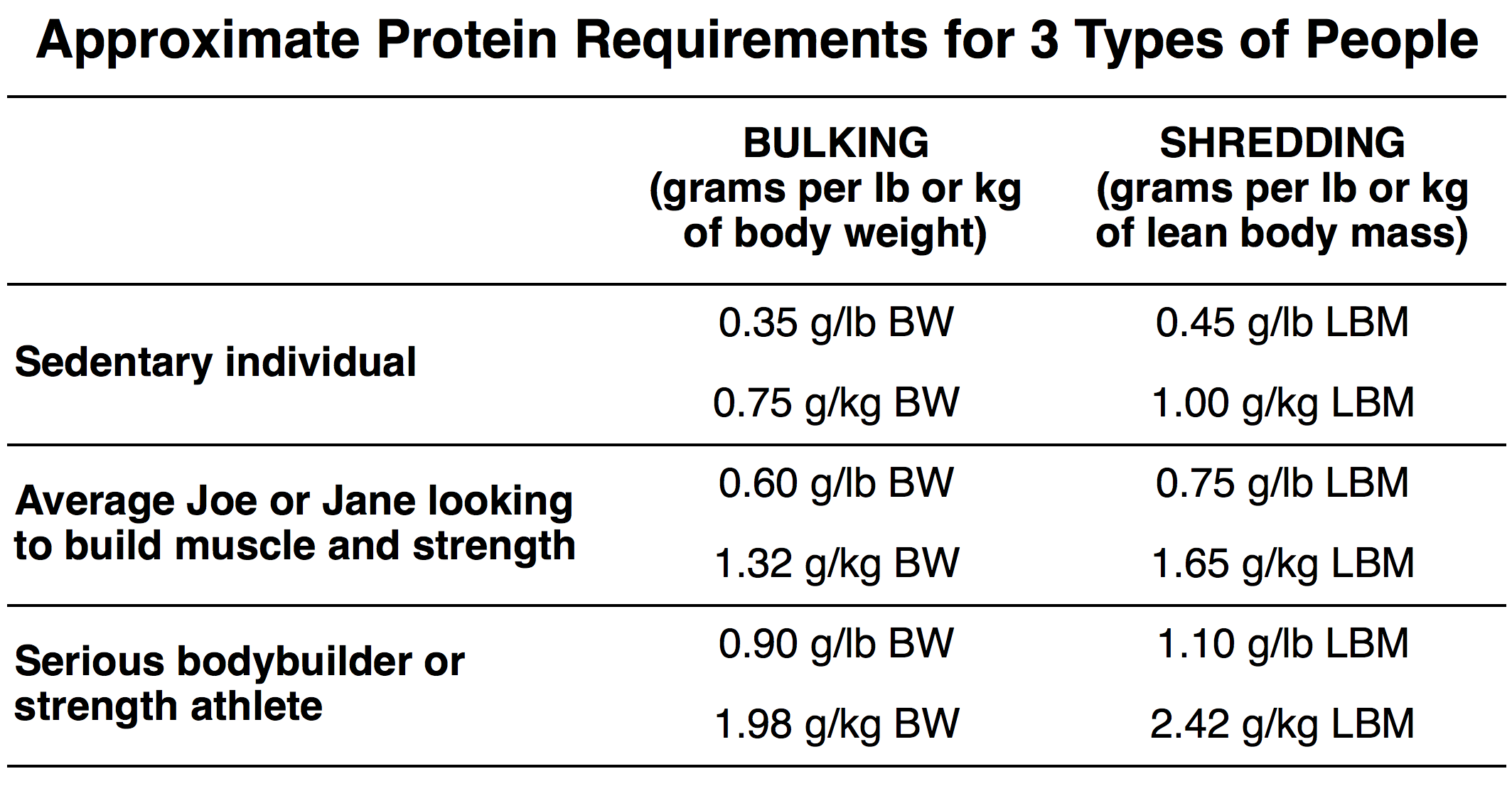
If you are bulking - which means that your main fitness goal is to gain muscle and strength - I recommend you consume 0.9 grams of plant protein per pound of body weight per day (2.0 grams per kilogram of body weight per day).
I know, I know. This number probably sounds really high. And it likely is higher than necessary even if you are following an intense weightlifting regime.
But trust me. When you are working your ass off in the gym to gain muscle, you want to be sure you are getting all of the protein you need to be sure you aren’t leaving any gains on the table. At the same time, you don’t want to go overboard.
Let’s Take A Look At What The Research Says
As I will cover in the following paragraphs, numerous nutritional studies indicate that a high carb, high protein, low-fat diet is optimal for muscle mass and strength gains.
This can be accomplished on a healthy, whole food, plant-based (WFPB) diet with some protein supplementation depending on your specific goals.
A study by the Exercise Nutrition Research Laboratory at the University of Western Ontario confirmed that regular exercise increases daily protein requirements by as much as 100% vs. recommendations for sedentary individuals.
Given that the recommended daily allowance for protein is 0.36 grams per pound of body weight (0.8 grams per kilogram of body weight) for healthy adults, the researchers suggest 0.73 to 0.82 grams per pound of body weight per day (1.6 to 1.8 grams per kilogram of body weight).
A study by the Exercise Metabolism Research Group at McMaster University found that protein intakes in the range of 0.6 to 0.82 grams per pound of body weight per day (1.3 to 1.8 grams per kilogram of body weight per day) consumed in 3-4 equal amounts each day will maximize muscle protein synthesis. The researchers suggested that experienced athletes likely require less protein.
A study from the McMaster University Medical Center concluded that athletes working to maximize bulk and strength while resistance training should consume foods with high biological value with a maximum protein requirement of approximately 1.7 grams per kilogram of body weight per day (0.77 grams per pound of body weight per day).
While protein is vitally important for muscle hypertrophy, there is very little support for the super high protein intakes recommended by traditional bodybuilding diet plans (e.g. > 2.5 to 3.0 grams of protein per kilogram of body weight, or > 1.14 to 1.36 grams per pound of body weight).
So as things stand right now in the scientific literature, if you are serious about gaining muscle and strength, and you want to be safe in terms of consuming enough protein to promote that muscle growth, then the ideal range to aim for is 0.73 to 0.82 grams of protein per pound of body weight (1.6 to 1.8 grams per kilogram of body weight), understanding that this is just to be on the safe side.
So why do I recommend 0.9 grams of protein per pound of bodyweight (2.0 grams per kilogram of bodyweight per day)?
As I discussed in last week’s article Animal VS. Plant Protein: Which is BEST for Muscle Gains?, studies prove that gram for gram, animal-based protein is more effective at building muscle than plant-based protein.
Although the bodybuilding studies cited above do not specify the protein source used for analysis, I am assuming that most of the protein was animal-based (likely with whey protein supplementation), therefore I am adding 15% more protein to compensate for the lower digestibility of plant-based protein sources as we discussed in the previous sections.
I know it can be difficult to hit 0.9 grams of protein per pound of body weight (2.0 grams per kilogram of body weight per day) while eating only whole foods, especially if your diet is high in raw plant foods.
But I’d like to take a second to repeat something I said earlier:
I know, I know. This number probably sounds really high. And it likely is higher than necessary even if you are following an intense weightlifting regime.
But trust me. When you are working your ass off in the gym to gain muscle, you want to be sure you are getting all of the protein you need to be sure you aren’t leaving any gains on the table.
If you are not supplementing your diet with protein powder, you will definitely have to plan out your meals and focus on high-protein foods. Protein powders simplify your life and allow you to eat plenty of healthy fruits and vegetables while still hitting your high-protein intake.
How To Train to Take Advantage of That Protein
Without the proper lifting routine, it doesn't matter how much protein you eat. If you hit bicep curls for 10 sets of 30 reps and chug 5 protein shakes a day hoping to become jacked, you need a reality check.
Many gym goers make the mistake of doing way too much volume and focusing too much time on isolation exercises.
Whether your goal is to shred fat, maintain your physique, or bulk, you must incorporate a lifting routine focused on heavy, compound weight training.
What exactly is a compound exercise?
A compound exercise is an exercise that involves multiple joints and muscle groups. The best compound exercises are the squat, deadlift, bench press, dip, row, and overhead “military” press.
These heavy compound lifts form the basis of my typical weekly workout routine.
If you dedicate yourself to following a high-protein, whole food vegan diet and a proper weightlifting routine focused on heavy compound exercises, I promise you’ll make muscle and strength gains faster than ever!
Are you getting enough protein?
Try our FREE Vegan Nutrition Calculator to be sure you’re giving your body the nutrients it needs to meet your goals!
That's a wrap! Thank you so much for reading this article!
Was this article helpful to you? Please be sure to share this article with your vegan fitness friends by clicking the share button below! I'd really appreciate it and so would your friends!
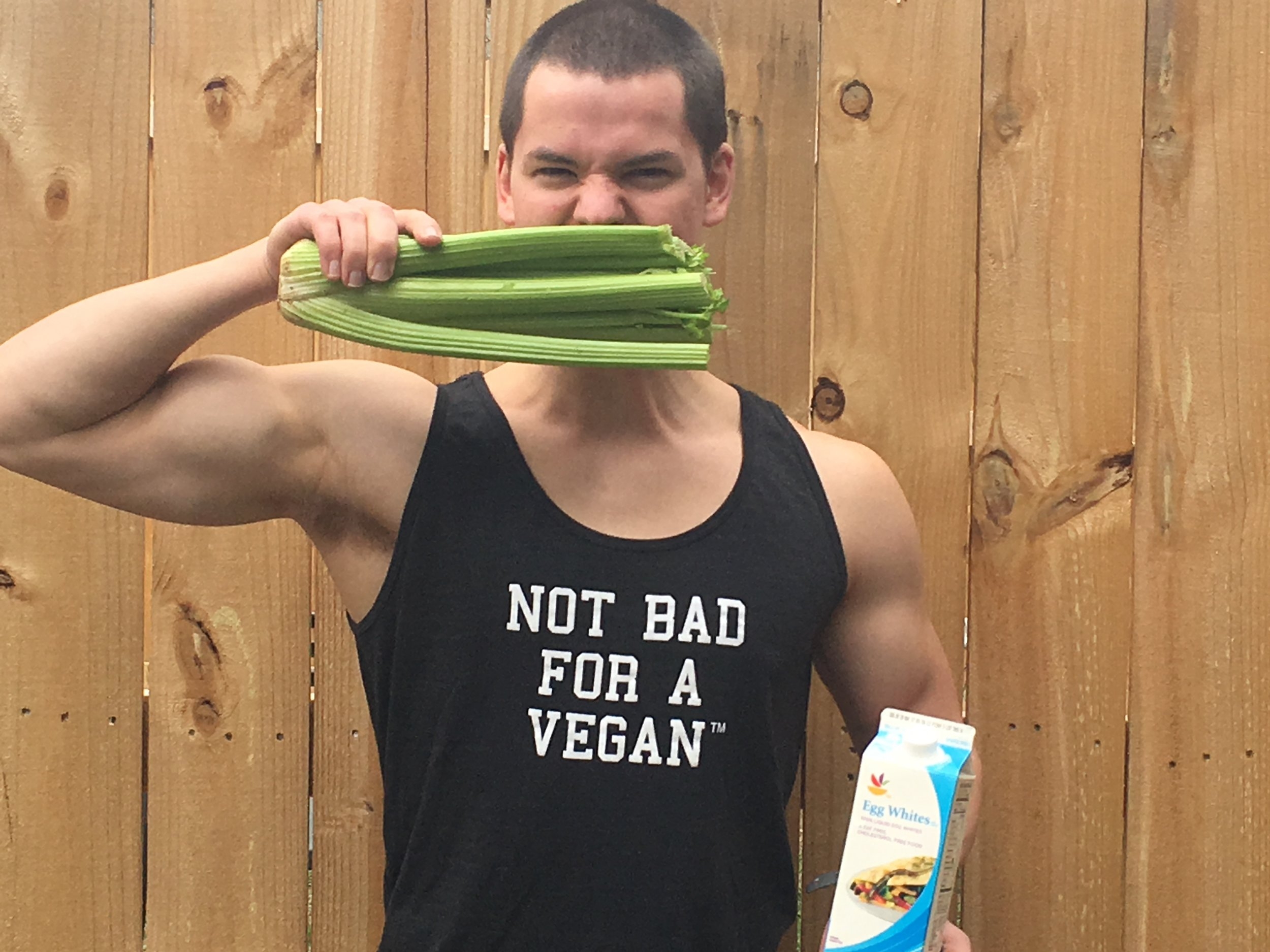
Animal VS. Plant Protein: Which is BEST for Muscle Gains?
Gram for gram, animal-based protein has been proven time and again to be more effective at building muscle than most plant-based protein. BUT, you can make muscle and strength gains just as easily on a plant-based diet. Read this article to learn how!
How Do You Measure Protein Quality?
The best test for assessing dietary protein’s ability to stimulate muscle protein synthesis (MPS), which is scientific speak for muscle growth, is to use stable isotope amino acid (AA) tracer methodology. Stable isotope AA tracers are able to directly measure AA bioavailability and utilization (i.e. the exact quantity of AA from a particular protein source that the body is able to use).
However, there are few studies that assess the MPS response to the ingestion of protein sources, especially plant protein sources, using stable isotope AA tracers.
Various alternative measures exist to evaluate dietary protein quality. The most widely adopted measures are the Protein Digestibility Corrected Amino Acid Score (PDCAAS) and, more recently, the Digestible Indispensable Amino Acid Score (DIAAS).
Although neither of these approaches provides precise insight into the true anabolic potential of a specific dietary source, they currently provide the best protein quality measures available.
DIAAS is suggested to be superior to PDCAAS because it treats dietary amino acids as individual nutrients and not simply as protein. Furthermore, PDCAAS analysis uses egg as a reference protein (a base score of 1.00) while DIAAS uses a theoretical protein that covers all known dietary requirements.
Protein Digestibility of Animal- vs. Plant-Based Protein

Researchers at Massey University in New Zealand define the digestibility of certain protein sources as the proportion of dietary protein-derived amino acids (AAs) that are effectively digested and absorbed, thus becoming available in a form suitable for body protein synthesis.
The entire journal article for their published research, titled Available versus digestible dietary amino acids, can be found in the British Journal of Nutrition here.
In general, it appears that plant-based protein sources may exhibit lower digestibility than animal-based proteins.
Animal-based protein sources, including dairy, eggs, and meat, are highly digestible. For example, most animal products clock in around 90 to 95% protein digestibility, so if you eat 40 grams of protein from these food sources, your body ultimately utilizes 38 grams or so.
Plant-based sources such as maize, oat, bean, pea, and potato tend to exhibit lower digestibility than do animal-based sources, with values ranging from 45% to 80%. So if you eat 40 grams of protein from these food sources, your body utilizes 18 to 32 grams.
However, purified plant protein sources such as soy protein isolate, pea protein concentrate, and wheat gluten (seitan) display a digestibility that is similar to that of animal-based protein sources (greater than 90%).
The researchers from Massey University, mentioned above, calculated PDCAAS and DIAAS scores for animal- and plant-based protein supplements, either in a concentrated or isolated form.
Both protein concentrate and isolate remove carbs and fat from a certain food source such as whey, soy, or pea. The difference between them is that protein isolate simply removes more of the carbs and fat, leaving a more “pure” protein powder behind. Protein concentrate is typically about 70 to 85% pure protein while protein isolate is 90 to 95% pure protein.
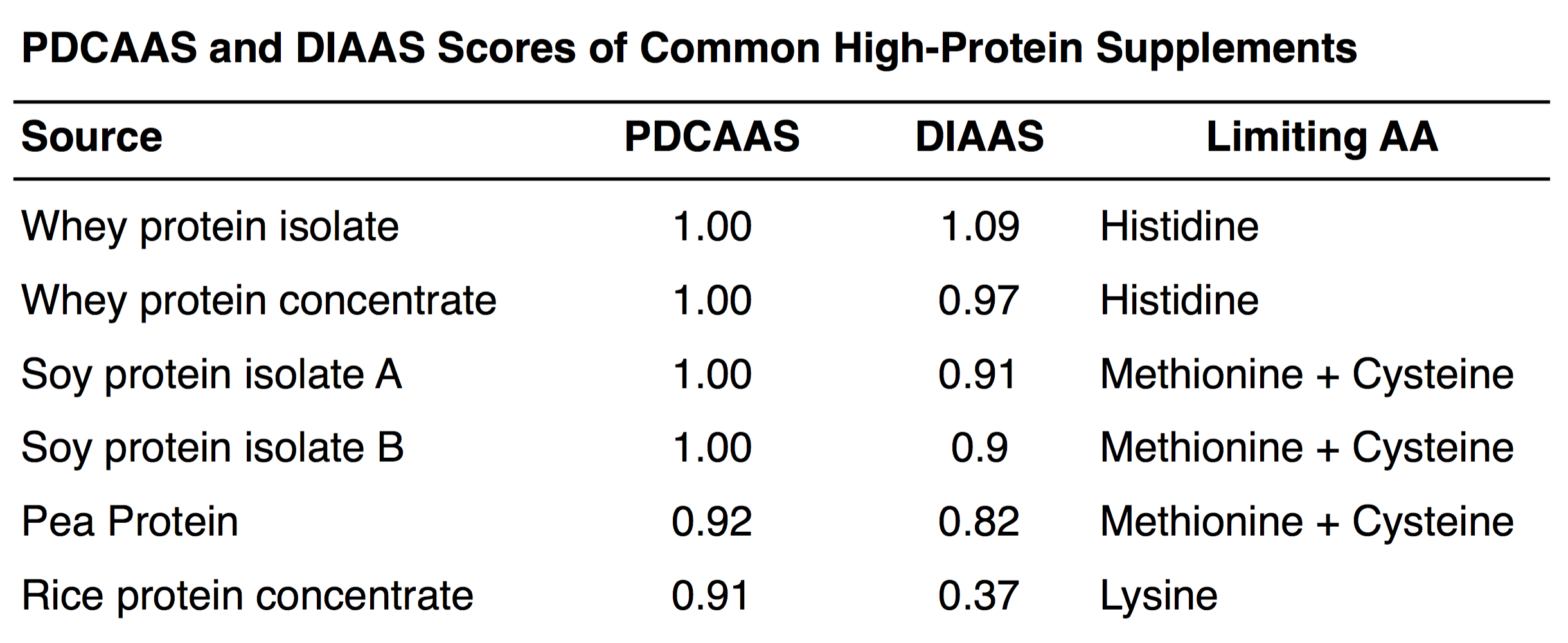
Note: the researchers define the Limiting AA as the “first limiting amino acid when compared to an ideal protein.”
Does Plant Protein’s Lower Digestibility and Essential Amino Acid (EAA) Content Inhibit Muscle Growth?
Gram for gram, animal-based protein has been proven time and again to be more effective at building muscle than most plant-based protein.
There is even research to suggest that plant-based protein sources such as soybeans, kidney beans, and legumes have “antinutritional” factors (i.e. compounds that interfere with the digestion and absorption of available protein), but more research must be conducted.
Researchers from the Human Performance Laboratory at the University of Connecticut conducted a long-term training study (9 months) in which a whey protein supplement was shown to significantly enhance gains in lean body mass over those seen in a soy protein-supplemented group by ~83%.
This study is one of the longest protein supplementation with resistance exercise trials every done and highlighted the importance of protein quality in determining exercise-induced muscle mass gains.
In another study, researchers overcame the apparent difference in the protein quality (measured by leucine content and amino acid bioavailability) of a vegan protein concentrate (a rice-derived protein named Oryzatein) vs. whey protein isolate by feeding their subjects a very large quantity of protein.
In feeding their subject groups 48 grams of whey isolate and 48 grams of rice protein concentrate, they delivered leucine doses of ~5.5 grams and ~3.8 grams, respectively, both greatly surpassing the highest levels of leucine needs and saturating the MPS response for both groups.
Thus, “equivalency” of protein in this study was not a function of the protein quality itself, but of the large per-dose quantities of protein consumed.
Collectively, these studies prove that gram for gram, animal-based protein is more effective at building muscle than plant-based protein.
However, the study that provided greater amounts of plant-based protein to compensate for its lower digestibility showed minimal differences in lean mass gain with resistance exercise when compared with animal-based protein.
So here’s the bottom line: the best way to compensate for the lower essential amino acid (EAA) content from plant-based protein is to simply eat greater quantities of plant-based proteins to support muscle mass gains. Plant-based protein supplementation, particularly with pea protein powder, can help significantly to support muscle mass gains.
Despite vegan strength athletes being at a slight disadvantage when it comes to protein digestibility than their meat-eating counterparts, we can gain muscle and strength just as easily as omnivores. It simply requires that you consume an adequate amount of high-protein plant foods like lentils, nuts, seeds, chickpeas, tofu, spirulina, hemp, tahini, and oats. I also drink one or two pea protein shakes per day, but you don't have to supplement with protein powders.
And more importantly for our health than protein, we don’t have to worry much about our fiber, cholesterol, and micronutrient consumption…unlike most meat eaters. #WINNING 😎
That's a wrap! Thank you so much for reading this article!
I’ll be publishing an article next week discussing exactly how much protein you need to consume as a vegan bodybuilder to maximize your muscle mass and strength gains.
Subscribe below to stay in the loop with the latest vegan bodybuilding content and keep making those vegan GAINS!
Was this article helpful to you? Please be sure to "like" 👍 this article by clicking the heart below and consider sharing it with your vegan bodybuilding friends!
Do you have any thoughts on the animal vs. plant protein debate? Please tell us in the comment section below! 👇 We'd love to hear from you!
Your vegan trainer,
Leif
P.S. - If you want your own NOT BAD FOR A VEGAN tank, you can grab one here.
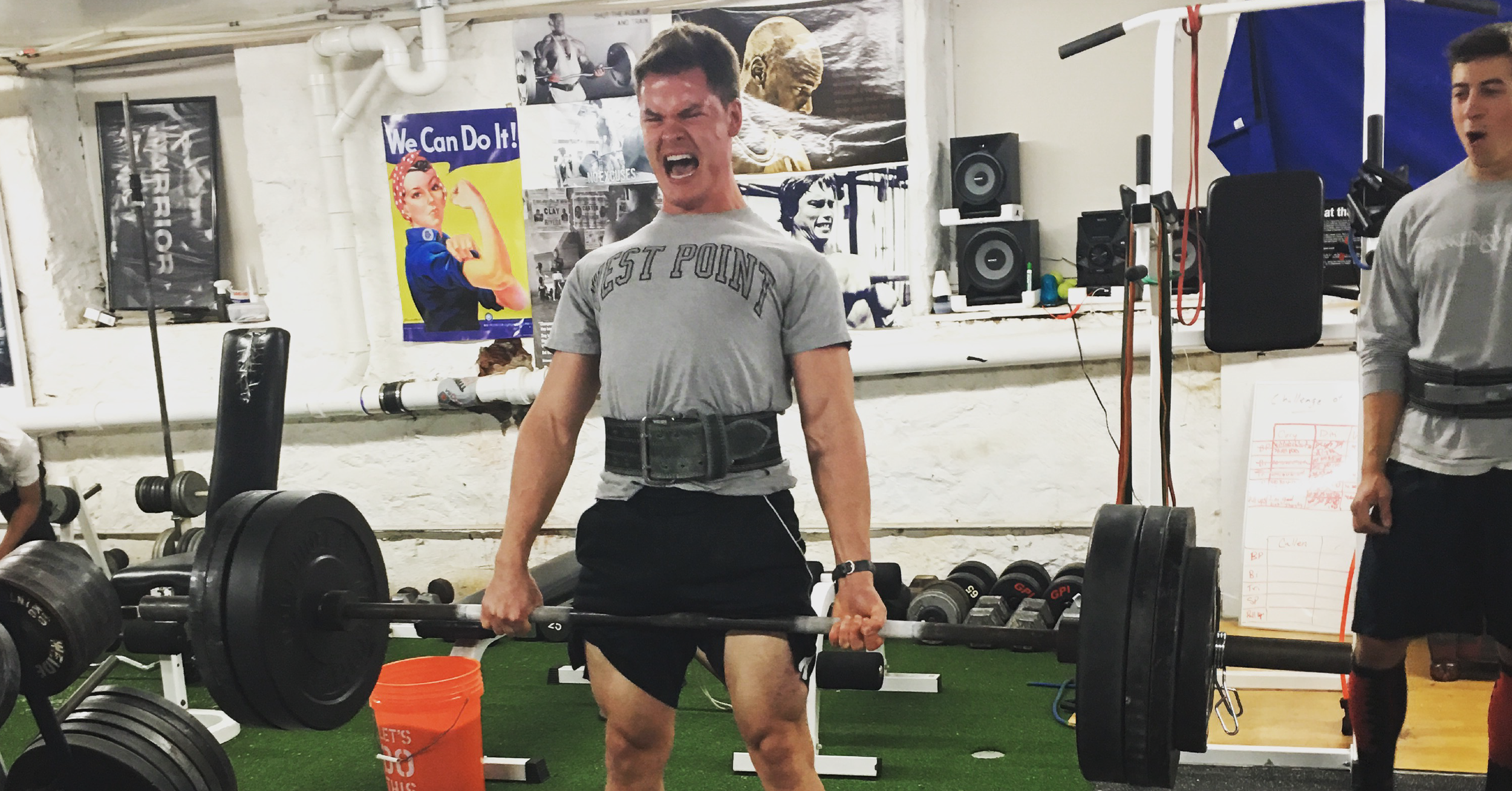
3 Proven Vegan Fitness Tweaks to Skyrocket Your Results
If you are having any trouble gaining muscle on a vegan diet, there are 3 possible causes...
If you've experienced any difficulty building muscle on a vegan diet, there are three possible causes:
You aren't eating enough
You're doing too much cardio
You're lifting too little or too much (yes, overtraining kills gains!)
I should note that none of these issues are inherent to vegan bodybuilding specifically, but rather plague lifters from all dietary backgrounds. Still, this article is specific to vegan bodybuilders, so let's dive into each one of these muscle-building pitfalls to make sure you keep making those vegan gains! 🌱 💪
Muscle-building pitfall #1: You aren't eating enough
Generally speaking, whole plant foods are less calorie dense than their animal product counterparts. And if you aren't in a caloric surplus, meaning you are consuming more calories than you burn each day, then your body will not be able to gain muscle.
Some research and anecdotes claim that beginner bodybuilders can both gain muscle and lose fat on a caloric deficit, but I don't have experience with this. However, I know for sure that anyone with a year of serious lifting experience can't make calorie-restricted "newbie gains."
So, when working to gain muscle, you must maintain a caloric surplus, but limit yourself to no more than 10 percent beyond your basal metabolic rate (BMR, or the amount of energy your body burns by simple being alive) plus activity burn (the amount of additional energy you burn from movement and exercise). In other words, you don't want to eat more than 110 percent of the calories you burn each day.
Hitting your numbers without going overboard will require you to (approximately) track your calories, both the calories you burn and the calories you consume. Once you track your calories for a few weeks, you'll get a pretty good idea what foods and portions you should be aiming for.
As for protein, my standard advice for protein intake when bulking is 0.9 grams of protein per pound of body weight per day to optimize the muscle building potential of your diet. Click here to learn Everything You Need to Know About Vegan Protein, and read the studies upon which I base my protein intake advice.
As a vegan, I'm sure you are concerned about eating healthy foods packed with nutrition, not just foods that build muscle. Unfortunately, most of the healthiest foods in the world are nutrient dense, but not calorie or protein dense. For this reason, you must use careful meal planning to maintain a caloric surplus and hit your higher-than-normal protein intake needs with a whole food, plant-based diet. My secret is that I drink my micronutrients instead of consuming monstrous salads that fill me up and take forever to eat.

Here's my micronutrient-packed Berry Ginger Kale Smoothie Recipe that allows me to check off more than HALF the boxes from Dr. Greger's Daily Dozen list. I sip a half gallon portion (64 oz.) throughout most mornings.
Note: Non-extractable polyphenols, potent micronutrients in plant foods that defend our bodies against degenerative diseases such as cancer and cardiovascular disease, form the majority of dietary polyphenols. In plant foods, these health-promoting polyphenols are stuck to dietary fiber. In other words, no fiber, no polyphenols. As such, juicing fruits and vegetables removes fiber and the plentiful polyphenols that bind to it. These findings suggest smoothies are preferable to juicing in maximizing micronutrient intake.
Muscle-building pitfall #2: You're doing too much cardio
I understand you want to stay lean while building muscle mass. So do I. Unfortunately, doing too much cardio fatigues your muscles, further breaking down muscles in need of repair after tough resistance training.
In a recent study, researchers divided 30 resistance trained men into 4 groups and they completed a 6 week training program in which they trained 3 days per week.
Group 1: Only strength training 3 times per week
Group 2: Strength training 3 times per week and endurance training (treadmill running) once per week
Group 3: Strength training 3 times per week and endurance training (treadmill running) 3 times per week
Group 4: Didn't train at all (control)
At the end of the program, Group 1 and Group 2 had the highest lower body strength increases, but Group 1, the strength only training group, had a significantly higher lower body power increase than all the other groups. Upper body strength increased similarly in Groups 1-3.
What do these findings tell us?
If muscle growth and strength are the primary goal, then you should keep cardio to a minimum
Interference between endurance training and resistance training is a local process. In other words, lower body-focused cardio like running has a negative effect on lower body muscle and strength gains, but doesn't affect upper body muscle and strength gains.
Thankfully, you can stay lean while building vegan muscle with a whole food vegan diet, heavy compound lifting, and some high-intensity interval training (HITT). Honestly, I only do HITT during the spring and summer months to shave off a few extra body fat percentage points. I've found that I can lean bulk quite well with a healthy diet full of whole plant foods like rice, potatoes, lentils, beans, and broccoli.

If your cardiovascular health is the main reason you do cardio, then 5-10 minutes of HITT per day, plus a diet free of cholesterol and little-to-no saturated fat will do the trick.
Just to clarify, I really enjoy hiking, mountain biking, and drumming, all activities that require serious movement and could be considered as "cardio." I'm not suggesting you stop doing physical activities you love. I'm just saying that you shouldn't slave away on a treadmill every morning because it hinders muscle growth.
Muscle-building pitfall #3: You're lifting too little or too much
You build muscle by damaging your muscles. This seems counterintuitive, I know, but allow me to explain.
Skeletal muscle is made up of long fibrous chains containing proteins. Bundles of thousands of fibers make up the muscle itself. When you engage in a heavy workout, you damage your muscles, causing microtears in the muscle fiber.
The body naturally repairs microtear damage by mending the torn fibers using amino acids, the components of protein your body synthesizes on its own and from food.
It takes about 48 hours for your muscles to repair themselves after a hard workout. This recovery process is known as cellular repair. The result is a muscle that is larger and stronger than before.
To cause microtear damage to your larger, stronger muscles, you must gradually increase the exercise-induced stress your muscles experience (i.e. lifting heavier and heavier weights over time). This gradual weight increase over time is called progressive overload.
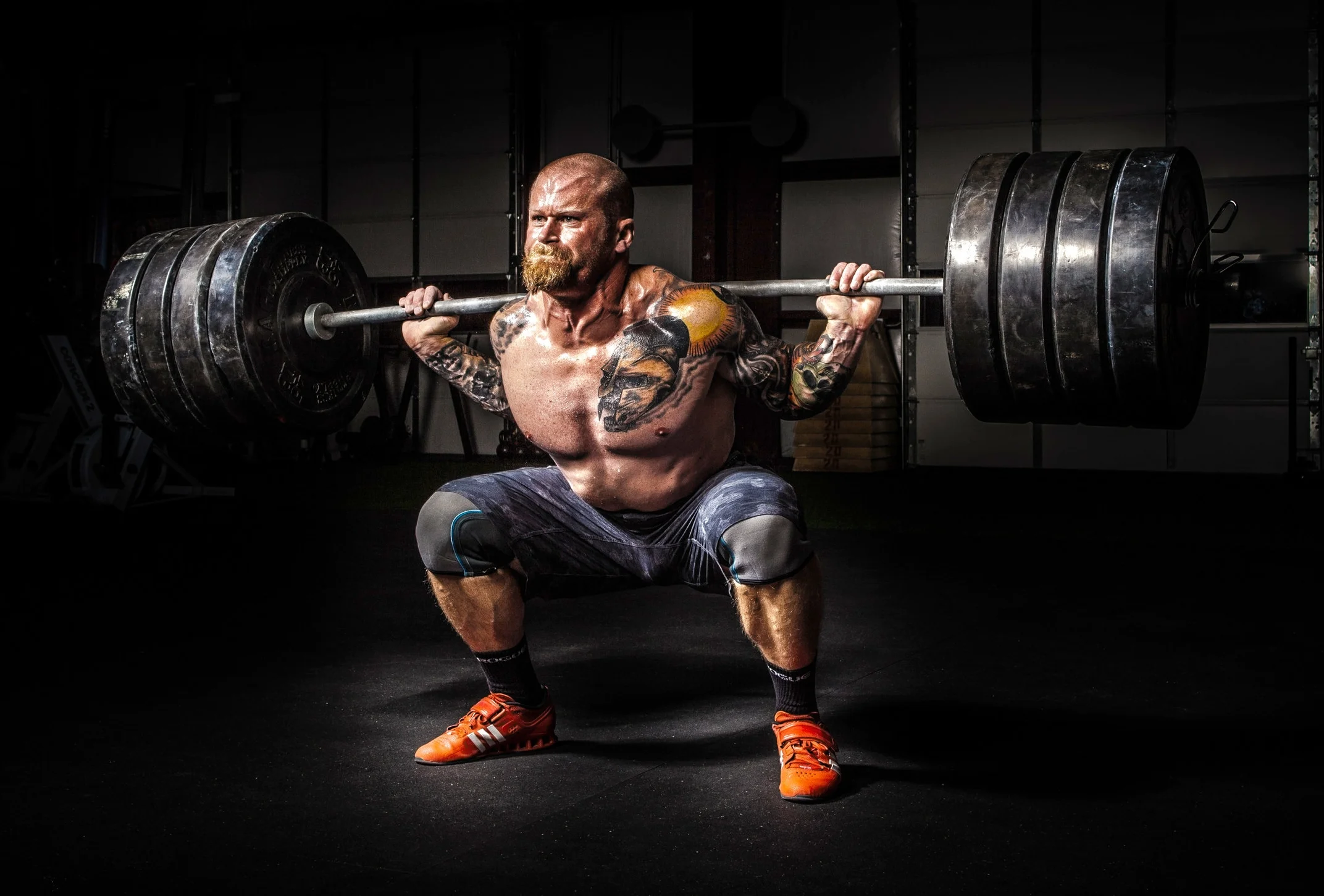
The Progressive Overload Principle
The progressive overload principle is the most important rule of natural bodybuilding. In order for muscles to grow in size and strength, they must be forced to adapt to a tension that is heavier than anything previously experienced. In other words, you must lift heavier and heavier weights over time as your body becomes stronger and your muscles become bigger.
Therefore, you MUST emphasize heavy compound weightlifting in your workouts to gain serious muscle and strength.
What exactly is a compound exercise? A compound exercise is an exercise that involves multiple joints and muscle groups.
Because compound exercises employ multiple muscle groups, they allow you to lift heavier weights through a wide range of motion and therefore better progressively overload your muscles.
If you want more information on what kind of exercises I do, check out my typical weekly workout routine and list of favorite exercises.
Volume is the total number of repetitions (reps) lifted over a specific period of time (usually a week).
If your volume per week is too low, you will struggle to gain muscle and strength. Remember, the goal is to progressively overload your muscles to gain size and strength. You can't progressively overload your muscles with a few squats, pullups, bench presses, and deadlifts per week.
If your volume per week is too high, you'll run into serious problems with overtraining and push your muscles beyond repair.
Get the volume right, and you'll make gains faster than ever!
If you want to learn all everything you need to know about hypertrophy (the technical term for muscle growth), download your free copy of my 35-page Complete Guide to Building Vegan Muscle. I promise it will blow you away!
That's a wrap! Thank you so much for reading this article!
Was this article helpful to you? Please be sure to "like" 👍 this article by clicking the heart below and consider sharing it with your vegan bodybuilding friends!
What difficulties have you encountered with vegan bodybuilding? Please tell us in the comment section below! 👇 We'd love to help you!
Your vegan fitness trainer,
Leif