

The Ultimate Vegan Weight Loss Guide
Discover how to lose fat and build muscle on a plant-based diet with this science-backed vegan weight loss guide. Learn sustainable strategies, protein tips, meal planning, and mindset shifts to help you achieve long-term results without giving up your favorite food.
For my first year as a vegan, I struggled to lose weight. I thought eating a plant-based diet was enough, but I constantly felt hungry, frustrated, and confused about why the scale wouldn’t budge.
It wasn’t until I started implementing the simple fat-burning strategies in this article and shifting my mindset that I finally began to see real progress. Over the next year, I dropped 25 pounds of fat while building lean vegan muscle and haven’t looked back.

Losing weight as a vegan can feel frustratingly difficult. People often assume that eating a plant-based diet automatically makes you lean and fit, but that’s not the case. Even if you are eating whole plant foods, skipping junk, and putting in the work, I know first-hand that sometimes the fat just will not budge. The truth is, many plant-based diets, while healthy, aren't optimized for body recomposition (i.e., fat loss and muscle gain).
But here’s the good news: Once you understand the foundational principles in this article and build a few key habits, fat loss becomes simple, sustainable, and even (dare I say) enjoyable... okay, maybe not always enjoyable, but definitely rewarding! 🙂
This article will show you how to lose fat, feel full and energized, and stay in control of your results — all without giving up your favorite foods or depending on willpower.
Let’s dive in and make vegan fat loss work for you! 🔥
Weight Loss vs. Fat Loss: Why the Difference Matters
Whether you want to lose 10 pounds or 100 pounds, you don’t just want to “lose weight.” You specifically want to lose fat. This is an important distinction that is often the very reason so many people fail to implement the right fat loss strategy.
Let’s say you want to lose 20 pounds, and I have some magic ability to make this happen. With a snap of my fingers, you immediately lose 20 pounds. However, like all things that sound too good to be true, there’s a catch! And unfortunately, you didn’t read the fine print discussing the terms of my magic ability. Oops! You were just too excited to finally drop those 20 pounds!
It turns out that my magic weight loss finger snap trick only works on muscle. So, while you did achieve your goal of losing 20 pounds, it was all muscle! Yikes!
Of course, this would not happen instantly, but it does happen in real life. Most weight loss programs can help you lose weight if you follow them, but they are not designed to target fat while protecting lean muscle. Realistically, no program will cause all of your weight loss to come from muscle, but even a small amount of muscle loss during weight loss can negatively affect how your body looks and feels.
This is why even people who successfully lose weight without focusing on fat loss often feel disappointed with the results. They might be smaller and a bit leaner, but not in a way that makes them look or feel the way they hoped.
Fat loss and weight loss are not exactly the same. If you don't protect your muscle while losing weight, you'll look smaller, but not leaner.
How Your Body Stores and Burns Fat
Now that you understand why focusing on fat loss, not just weight loss, is so important, let’s talk about how your body actually stores and burns fat.
Fat gain and fat loss come down to energy balance. This refers to the difference between how many calories you eat and how many you burn through movement and metabolism. Calories are simply a unit of energy.
As a former engineer, I love scientific definitions, so for all my fellow nerds, here’s what a calorie actually is: one calorie (technically a kilocalorie or "kcal") is the amount of energy required to raise the temperature of one kilogram of water by one degree Celsius.
When you eat more calories than your body needs, the extra energy is stored as fat, like filling up a fuel tank. But instead of gasoline, your body stores that energy in the form of body fat. It holds this “fuel” in two main areas: visceral fat, which sits deep in your abdomen and wraps around your internal organs, and subcutaneous fat, which lies just beneath your skin.

Visceral fat is the more dangerous type. It is strongly linked to a higher risk of heart disease, type 2 diabetes, and other metabolic conditions. Even if you do not have much visible fat that you can pinch, high levels of visceral fat can still pose a serious risk to your health. You can estimate your visceral fat level through tools like DEXA scans, body composition scales, or waist measurements, but the most accurate results come from medical imaging like MRI or CT scans.
The Fundamental Principle of Fat Loss
To lose fat, you need to burn more energy than you consume. This is called a calorie deficit. If your body burns 2,500 calories in a day but you only eat 2,000, the remaining 500 calories must come from somewhere. Since your body cannot create energy out of thin air, just like a car cannot drive 250 miles on 200 miles’ worth of gas, it pulls energy from stored body fat to make up the difference.
To put this into perspective, your body needs to burn about 3,500 calories to lose one pound of fat. That means creating a daily deficit of roughly 500 calories can help you lose about one pound of fat per week (500 x 7 = 3,500).
The size of your calorie deficit plays a big role in your fat loss success. While your ideal calorie deficit target depends on your goals, body composition, and more, a range of 15 to 30% below maintenance works well for most people.
Your maintenance calorie level is the number of calories your body burns in a typical day. For example, if you burn 2,500 calories and eat 2,500 calories per day on average, you will maintain your current weight. But if you eat 2,000 calories and burn 2,500, you are in a 500-calorie deficit, or 20% below maintenance.
A larger deficit may lead to faster weight loss results, but it is harder to maintain and increases the risk of losing muscle and slowing your metabolism. A smaller deficit is easier to sustain but can slow your progress and test your patience.
This is why nutrition and training must work together to create a moderate calorie deficit. In general, it is better to create a calorie deficit by moving more rather than simply eating less, though most people use a combination of both. This allows you to fuel your body properly while still making steady, sustainable progress.
Beyond maintaining a moderate deficit, eating enough plant protein and doing regular resistance training is essential. Resistance training simply means challenging your muscles against some form of resistance. This could be lifting weights at the gym, doing bodyweight squats in your living room, or using resistance bands in your garage. You do not need fancy equipment or heavy weights. If your muscles are working against resistance, you are doing resistance training.
Adding resistance training to a solid fat loss nutrition plan (moderate calorie deficit + plenty of plant protein) helps preserve your lean muscle and keeps your metabolism high. It also provides a powerful “afterburn” effect, meaning your body continues to burn extra calories for several hours after your workout. This makes fat loss easier, more efficient, and more sustainable.
What you eat matters for your overall health, but when it comes to fat loss, the two biggest nutrition keys are simple:
Maintain a calorie deficit
Eat plenty of plant protein
You can absolutely enjoy your favorite foods, like vegan pizza or dairy-free ice cream, and still make progress, as long as you maintain a calorie deficit.
What matters most is consistency, not perfection.
Now that you understand the science behind fat loss, it’s time to put that knowledge into action with simple, real-world strategies.
Let’s dive into the 10 core habits that make vegan fat loss simple, satisfying, and sustainable.
10 Habits That Make Vegan Fat Loss Simple, Satisfying, and Sustainable
Fat loss doesn’t have to mean constant hunger, cutting out your favorite foods, or surviving on green smoothies and sheer discipline. When done right, it can actually feel simple, energizing, and even enjoyable.
The secret is building a handful of key habits that reduce hunger, increase satisfaction, and support consistency, without depending on willpower. Whether you’re just starting out or trying to break through a plateau, these 10 habits will help you lose fat on a vegan diet in a way that truly lasts.
Habit 1: Stay in a Sustainable Calorie Deficit
I know this might be an unpopular opinion, but I’m a big believer in slow(ish), sustainable fat loss.
One of the main reasons people struggle to lose weight and keep it off is that they swing between extremes. They go all-in with hyper-restriction, slashing calories too low and trying to white-knuckle their way to results, only to crash and rebound with binging and burnout. This is the classic yo-yo effect.
Let me be clear: this is not a willpower problem. It’s your body doing exactly what it’s designed to do. When calories drop too low, your body shifts into survival mode. It increases hunger hormones and lowers your energy levels, which causes you to move less throughout the day. This reduction in daily activity decreases the amount of energy you burn and makes fat loss harder to sustain.
The truth is, your body does not care about fat loss. It cares about survival.
That’s why the real key to lasting results is taking a slow, steady approach. One that allows you to stay consistent, protect your metabolism, preserve muscle, and build habits you can actually maintain.
As we’ve learned, hitting the right calorie deficit target is essential. And for most people, that means not going as low as they think.
One of the most common mistakes we see is cutting calories too aggressively. Going too low can increase cravings, cause muscle loss, and lower your daily energy burn, making progress harder to sustain.
The key is to create a moderate deficit that allows for steady progress without draining your energy or sacrificing lean muscle. Most of our clients do best eating about 15% to 25% below their maintenance level. This is a sustainable range that delivers consistent results over time.
If you are not sure what your calorie targets should be, use our free, Vegan Nutrition Calculator. It takes the guesswork out and gives you personalized nutrition targets to aim for.
Fat loss isn’t about eating as little as possible. It’s about eating the right amount to fuel your body, support your goals, and create results that actually last.
How to Lose Weight Without Counting Calories
It is absolutely possible to lose weight without counting calories. We help some of our clients do this by teaching them how to tune into their body’s natural signals using a tool called the Hunger-Fullness Scale.
If you are looking for a more mindful, less numbers-focused approach to fat loss, this tool can be a game-changer. You can download the Hunger Fullness Scale here.
The Hunger-Fullness Scale is a tool to help you develop awareness of your body's natural hunger and fullness cues. It ranges from 1 to 10. The goal for fat loss is to begin eating when you feel a hunger level of around 3 and to stop eating at a fullness level of 6 or sometimes 7.
- Nausea
- Feeling sick or ill
- Stuffed
- Discomfort
- Stomach distension
- Slight discomfort
- Feeling too full
- Feeling pressure in stomach
- Feeling content
- Fully satiated
- Full stomach
- Slight sensations of fullness
- Starting to feel satiated
- Neither hungry nor full
- Ready to eat
- No urgency
- Stomach slightly empty
- Some urgency
- "Eating sounds like a good idea"
- Craving
- Need energy
- Ravenous
- Headache
- Irritable
- Growling
- Low energy
- Dizzy
- Nausea
- Feeling ill
Personally, I do not track my nutrition anymore. After years of practice, I have learned to eat intuitively in a way that supports my goals. This is also a skill we help our coaching clients develop. Our goal is always to help people reach a point where eating well feels natural and sustainable, without needing to track every bite.
Set a moderate calorie deficit of 15–25% to protect your metabolism, preserve muscle, and make fat loss sustainable.
Habit 2: Build Every Meal Around 15–25 Grams of Protein
I used to eat a low-protein diet. Looking back, I would say this was the #1 mistake that I made as a vegan who wanted to get lean and fit.
Protein is essential for preserving muscle while losing fat. It also helps keep you full and burns more calories during digestion than carbohydrates or fats. When protein is the foundation of your meals, fat loss becomes easier, more satisfying, and far more sustainable.
Aim for at least 0.7 grams of protein per pound of body weight (or 1.5 grams per kilogram). For best results, aim for 0.8 grams per pound (1.8 grams per kilogram). If you are over 20% body fat as a man or over 30% as a woman, use your target body weight, not your current weight, to calculate your protein needs. Most women aiming for a healthy weight between 120 and 160 pounds will need roughly 90 to 125 grams of protein per day to support optimal fat loss.
To help reach your daily protein target, build each meal around a main protein source that provides 15 to 25 grams of protein. When combined with the smaller amounts found in the rest of your food, each meal will typically contain 20 to 40 grams of total protein.
This approach also aligns with research from Dr. Brad Schoenfeld and Alan Aragon, which shows that spreading protein intake across the day is key to optimizing muscle growth and preserving lean muscle during fat loss.
The Vegan Fat Loss Plate
When I’m building a fat loss meal, I focus on three key components:
✅ Component 1: A Main Protein Source (15–25 Grams)
Your protein source is the foundation of your plate. It helps preserve lean muscle, keeps you full longer, and makes it easier to stay in a calorie deficit without feeling deprived. Aim for 15 to 25 grams of protein in your main protein source. A good rule of thumb is to make this about one-quarter of your plate.
Examples of good main protein sources:
-
Tofu
Nasoya Organic Extra Firm Tofu (20 g per ½ block). Tofu is my go-to protein source, but you can still eat high-protein without soy; just check out our soy-free high-protein meal prep. -
Edamame Pasta
Explore Cuisine, Organic Edamame Pasta (25 g per 2 oz dry pasta). I especially love the Edamame & Mung Bean Fettuccine. -
Textured Vegetable Protein (TVP)
Our High-Protein Homemade Veggie Burger (TVP burger) (27 g per patty) -
Lupini Beans
A bag of BRAMI Lupini Beans (20 g per bag). I rarely build full meals around lupini beans, but they're an excellent, filling snack, especially when I'm traveling. -
Tempeh
A serving of Lightlife tempeh (18 g). Not my favorite on its own, but throw on some BBQ or teriyaki sauce and it's great. -
Edamame
1 cup of edamame beans (19 g). Lightly salted, they make a satisfying and filling protein base. -
Plant-Based Meats
There are also plenty of vegan "meat" products like Beyond Meat Beyond Burgers (20 g per patty) and Gardein Chick'n Tenders (15 g protein per serving). Personally, I don't eat these products much, but they are packed with protein. -
Lentils
I eat lentils almost every day. While they're not as high-quality a protein source as some of the other options on this list, they're a fantastic soy-free choice. A half-cup (about 100 g) provides around 9 grams of protein. -
Seitan
Speaking of soy-free options, seitan is another great one. Just 4 oz (113 g) delivers about 24 grams of protein for only 120 calories. It's highly versatile and surprisingly easy to make at home.
Pro tip:
You do not need to eat anything boring. Add your favorite sauces or seasonings, and keep experimenting with recipes until you find a few go-to meals you truly enjoy.
Also, this isn’t a rigid formula — your plate doesn’t need to be cut into perfect quarters. For example, I often have oatmeal for breakfast with a scoop of peanut butter protein powder stirred in. That gives me 20 grams of protein, even though it’s not visually a quarter of the bowl.
✅ Component 2: Veggies and Fruits to Add Volume and Nutrition
Fill half your plate with non-starchy vegetables and low-sugar fruits. They’re packed with fiber and nutrients, add volume to your meals, and help keep you full without adding many calories.
Tip: Don’t stress about portions when it comes to low-calorie vegetables. If you want extra broccoli, zucchini, kale, or cucumbers, go for it. These veggies are high in fiber, low in calories, and can actually make it easier to stay full and stick to your fat loss goals.
Examples: Broccoli, spinach, kale, bell peppers, zucchini, mushrooms, cauliflower, berries.
✅ Component 3: Carbs to Fuel Your Body and Add Satisfaction
Fill the final quarter of your plate with carbohydrates. Carbs are your body’s preferred energy source, and your brain depends on them. Despite accounting for only about 2% of your body weight, your brain is the most energy-demanding organ in your body, using roughly 110 grams of glucose (about 440 calories) every day.
Carbohydrates add satisfaction, variety, and balance to your meals. Focus on whole-food carbs most of the time, but there’s also room for your favorite comfort carbs when used mindfully.
Examples: Sweet potatoes, brown rice, quinoa, oats, beans
Flexible options: Pasta, bread, or other favorites (enjoyed in moderation)
Here’s a good visual breakdown of the Vegan Fat Loss Plate:
This approach isn’t about being perfect. It’s about creating a simple, sustainable structure that works for you. When your meals are satisfying, well-balanced, and high in volume, fat loss becomes much easier to stick with. The Vegan Fat Loss Plate helps you build nutrient-rich meals that naturally support your calorie and protein goals, without overthinking every bite.
Here’s how I practice this: I include a main protein source in every meal. Some of my favorites are tofu, lentils, soy curls, and edamame pasta. I also love snacking on fava beans and lupini beans.
One trick that saves me a lot of time is marinating two blocks of tofu at once and storing them in Pyrex containers. When I am ready for a meal, I just pull some out and air-fry it. It is an easy way to have fresh, crispy tofu ready whenever I need it. Here’s how I make it.
I also use a rice cooker to batch-cook rice and lentils separately, and I always keep cooked broccoli and cauliflower in the fridge. I store everything in Pyrex containers so I can easily mix and match healthy meals without overthinking it.
Note: the containers on the right are filled with homemade tofu chick’n salad, which has become one of my all-time favorites! Here’s the recipe.
Bonus Tip: Start With Veggies and Water
A simple way to control your appetite and reduce overeating is to start your meal with a glass of water and some vegetables. Beginning with high-fiber, low-calorie foods helps fill you up and makes the rest of your meal more satisfying.
For sustainable fat loss, build every meal around a main protein source that contains 15–25 grams of protein. Combined with plenty of vegetables, balanced carbs, and a structure you can enjoy, this approach makes fat loss easier to stick with and far more sustainable.
Habit 3: Follow the 80/20 Vegan Flexible Eating Plan
Once you have the structure of your meals in place with the Vegan Fat Loss Plate, the next step is learning how to apply that structure consistently in real life. And that means making room for flexibility.
You do not need to be perfect to see results. In fact, trying to eat “perfectly” all the time is what causes many people to burn out. That is why we recommend our 80/20 Vegan Flexible Eating Plan: aim to get about 80% of your calories from whole, nutrient-rich plant foods, and leave 20% for fun foods — whether that’s vegan pizza, chocolate, or a scoop of dairy-free ice cream.
The meal below is a clear example of the 80/20 approach. About 80% of the calories come from whole, nutrient-rich foods like oatmeal with berries, a TVP burger with carrots and hummus, an apple with PBfit (powered peanut butter mixed in water), and chickpea pasta with tofu and salad.
The remaining 20% of calories come from 4 Oreos and a scoop of non-dairy ice cream. This shows that your favorite foods can still fit into a fat loss plan when enjoyed in moderation.
Quick note: You are welcome to adjust the 80/20 split to fit your goals and lifestyle. If you prefer a more whole-foods-based diet, you might aim for a 90/10 balance. If you struggle to eat enough calories (which is rare but can happen, especially for those focused on building muscle), a 70/30 approach might make things easier.
This mindset shift is key to building a sustainable nutrition strategy. It removes the all-or-nothing pressure and gives you the freedom to enjoy special occasions, meals out, and comfort foods without guilt. One slice of cake or a date night dinner will not derail your progress, as long as it stays the exception and not the norm.
That said, when those moments turn into consistent weekend overeating, they can quietly stall your progress. Even a few high-calorie days can offset an otherwise solid week of eating, which is why balance and awareness matter.

Here’s how I practice this: Honestly, no foods are completely “off limits” for me. I’ve found that when I label foods as “off limits,” it only fuels cravings and can lead to binge eating, which is not aligned with my health goals.
I do practice moderation with some of my vices, like tortilla chips, by not buying them every time I grocery shop. But for the most part, I stay flexible and leave room in my diet for foods I love, like pizza.
Here’s an example: The plate below has a simple butter lettuce salad with an oil-free balsamic dressing. It is not the most nutrient-dense salad, and I would usually add a lot more veggies, but this was not made at my house, so options were limited. We also made a homemade BBQ pizza using Tofurky Chick’n pieces and diced red bell peppers. This is roughly a 20-gram protein portion of Tofurky.

Notice that we are still loosely following the Vegan Fat Loss Plate structure.
Protein (about a quarter of the plate): Tofurky Chick’n
Veggies (about half the plate): butter lettuce salad
Carbs (about a quarter of the plate): pizza dough
It is not perfect, but it is balanced and sustainable. And that’s what matters for long-term success!
Make Smart Swaps That Work For You
As you can see from my pizza example, you do not need to give up your favorite foods to lose fat. You just need to be intentional. By choosing higher-protein, lower-calorie alternatives and paying attention to portions, you can enjoy meals that satisfy your cravings and support your fat loss goals.
Simple Food Swaps That Do Both:
-
Pizza
Use a thin or cauliflower crust and top with tomato sauce, mushrooms, bell peppers, red onions, spinach, and high-protein TVP (textured vegetable protein) crumbles. Add a sprinkle of nutritional yeast or a light drizzle of balsamic glaze for extra flavor. -
Pasta
Choose chickpea or lentil pasta and toss with marinara sauce, steamed broccoli, zucchini, and cherry tomatoes. Finish with fresh basil and chili flakes for a flavorful, high-protein meal. -
Ice cream
Blend a frozen banana with chocolate or vanilla protein powder, a splash of soy milk, and a dash of cinnamon. Freeze for 30 minutes before serving for a creamy, soft-serve-style dessert. Here's how to make it. -
Tacos
Fill corn tortillas with seasoned lentils or crumbled tofu, shredded cabbage, grilled peppers and onions, and fresh cilantro. Add a squirt of hot sauce or a spoonful of chunky salsa for a low-calorie kick. -
Mac and cheese
Blend steamed cauliflower, unsweetened soy milk, nutritional yeast, garlic powder, and a pinch of salt for a light, creamy sauce. Toss with chickpea pasta and steamed spinach or peas for extra fiber and volume. -
Burgers
Build a black bean or lentil burger with lettuce, tomato, pickles, and mustard on a lettuce wrap or low-calorie bun. Serve with a side of roasted carrots or baked sweet potato wedges for a comforting, nutrient-dense meal. -
Nachos
Layer air-fried tortilla triangles or sliced cucumber with black beans, corn, diced tomatoes, shredded romaine, chopped red onion, and jalapeños (if you like a kick). Top with salsa and a drizzle of creamy white bean dressing made with cannellini beans, red bell pepper, nutritional yeast, and herbs. Here's how to make the dressing. -
Chocolate treat
Blend silken tofu with cocoa powder, stevia or monk fruit sweetener, a splash of vanilla extract, and a pinch of salt. Chill before serving for a rich, high-protein chocolate pudding.
The goal is not perfection. The goal is consistency through flexibility. That is what makes this approach enjoyable and something you can stick with for life.
Habit 4: Avoid the Hidden Calorie Trap

A huge diet trap that many people fall into is consuming a lot of hidden calories throughout the day. These often come from calorie-dense condiments like salad dressing and cooking ingredients such as oil. They may seem small, but these additions add up quickly and are one of the biggest reasons people fail to get results from an otherwise solid nutrition plan. When you are trying to maintain a moderate calorie deficit, there is not a large margin for error.
For example, that small handful of almonds you ate at your desk? That was 180 calories. Add that to the 70 calories of Earth Balance you spread on your toast at breakfast, plus the 80 calories of creamer you added to your afternoon coffee, and the 240 calories of oil used to sauté your dinner. If you are aiming for a 500-calorie deficit, but you accidentally eat 570 extra calories without realizing it, you will not lose any fat. It is as simple as that.
You do not need to be perfect, but if you want to make consistent progress, you do need to remain aware. Paying closer attention to hidden calories is one of the simplest ways to tighten up your nutrition and start seeing better results without overhauling your entire diet. Small changes in awareness can lead to big changes in outcome.
Hidden calories from oils, creamers, and other small additions can quietly stall your fat loss. Paying attention to these extras helps you stay consistent and in control.
Habit 5: Don’t Drink Your Calories
After addressing hidden calories in your meals, it is just as important to take a closer look at your drinks. Liquid calories are one of the most overlooked fat loss blockers. They do not provide the same feeling of fullness as solid food, which makes it easy to overconsume them without even realizing it.
Even drinks that seem healthy, like smoothies, oat milk lattes, or fresh-pressed juices, can quietly add hundreds of calories to your day. These extras may seem harmless, but they can quickly erase the calorie deficit you are working to create.
For many people, cutting back on liquid calories can save between 200 and 500 calories per day. That is often enough to turn a fat loss plateau into steady progress.
Swap high-calorie drinks for zero-calorie alternatives like water with lemon or cucumber, unsweetened herbal tea, sparkling water with a splash of citrus, or cold brew coffee with a dash of cinnamon. Iced green tea with mint is another great option that hydrates and refreshes without extra calories. Personally, I enjoy a zero-calorie Zevia soda (sweetened with Stevia) every once in a while.
As we covered in Habit 4, small additions add up quickly. Be mindful of what you put in your drinks. Creamers, sweetened plant-based milks, and flavored syrups can turn a simple beverage into a high-calorie drink that does not keep you full.
Liquid calories can quietly stall your progress. Choose low or zero-calorie drinks that hydrate you without interfering with your fat loss goals.
Habit 6: Create a Low-Temptation Environment
One of the fastest ways to derail your fat loss progress is to wait until you are hungry to decide what to eat. When you are tired, stressed, or low on willpower, you are much more likely to give in to cravings and convenience, even when those choices do not align with your goals.
That is why your environment matters. Setting up a low-temptation environment reduces decision fatigue, limits cravings, and makes it much easier to stick with the habits that support your progress.
Here is a quick story that shows just how powerful this shift can be.
A True Story About Clif Bars (and Lack of Willpower)
I must admit, I love Clif Bars. Especially Chunky Peanut Butter Clif Bars. Despite my best intentions, I would often end up with a box (or two) of them in my cart every time I walked through the energy bar aisle of my local grocery store.
A few years ago, I remember having a particularly unhealthy week. One evening, while working late at my desk around 2:00 a.m. (also not a healthy choice), I suddenly noticed a half-eaten Clif Bar in my hand. I looked around and saw a dozen wrappers scattered across my desk. I had literally binge-eaten a dozen Clif Bars in just a few hours! That moment hit me hard. My Clif Bar habit was seriously undermining my health and fitness goals.
The next time I went to the grocery store, I avoided the energy bar aisle entirely. I didn’t even glance down the aisle because I was afraid I lacked the willpower to resist their magnetic pull. Somehow, I walked out of the store without buying a single Clif Bar.

And then a strange thing happened. I didn’t eat a single Clif Bar that entire week. How was that possible?! I had eaten a few per day, every single day, for the past several months!
The answer was painfully obvious. I didn’t eat any Clif Bars because I didn’t have any in my house. And I didn’t have any in my house because I didn’t put them in my grocery cart. Meanwhile, those organic Fuji apples I bought as a replacement snack did get eaten. With one simple swap, I had starved a negative habit and fed a positive one.
I call this The Law of Grocery Carts, which states: Whatever you put in your cart will get eaten. Whatever you do not put in your cart will not get eaten.
That experience taught me that fat loss is not about strengthening your willpower. It is about creating an environment that makes the right choice the easy one. When you stop relying on discipline and start surrounding yourself with better options, everything changes.
Here are a few simple ways to do that:
Keep a few prepped healthy staples in your fridge that you genuinely enjoy. For me, that includes cooked lentils, roasted broccoli, baked cauliflower, and tofu salad.
Stock your kitchen with foods that support your goals
Avoid buying trigger foods that tend to pull you off track, like Peanut Butter Clif Bars
Store treats or less nutritious foods out of sight instead of on the counter
Pack healthy snacks for travel, errands, or long days to avoid relying on convenience food (my go-to snacks include: apples, bananas, fava beans, and lupini beans)
Make your go-to meals easy to assemble by keeping ingredients grouped together in your fridge or pantry
Keep a grocery list on your phone so you can shop with purpose and avoid impulse buys
Fat loss does not require perfection. It requires consistency, and that begins with an environment designed to help you succeed.
Willpower fades, but your environment stays. Set up your space to support your goals, not challenge them.
Habit 7: Walk Your Way to a Leaner, Calmer You

When it comes to fat loss, walking might be one of the most underrated tools available. It is low impact and requires no equipment. Unlike high-intensity workouts, walking does not leave you drained. It is sustainable, gentle on the body, and often enjoyable, especially when done outside.
A 20-minute walk adds up to roughly 2,000 steps (about 1 mile) and burns around 80 to 100 calories for most adults, depending on your weight and walking speed. Done daily, that adds up to about 600 to 700 calories per week — roughly 0.2 pounds of fat, or more than 10 pounds of fat over the course of a year. A consistent walking habit might seem small, but it can make a big difference over time.
But the benefits go far beyond just burning calories. Walking improves blood sugar control, supports cardiovascular health, and reduces stress levels. That last point is crucial, especially if emotional eating is something you struggle with. Lower stress often means fewer cravings and better self-regulation around food.
How to Set a Realistic Step Goal
Now that you know walking is such a powerful tool for fat loss, the next step is figuring out how to make it part of your daily routine in a way that feels doable.
In the fitness world, 10,000 steps per day is often held up as the gold standard. While that may work well for some, it is not the best starting point for everyone. If you are currently walking very little, trying to hit that number right away can feel overwhelming.
A better approach is to start with your current average and increase gradually. This builds confidence, consistency, and momentum without added pressure.
To find your current baseline, check the health app on your phone or fitness tracker. Most devices will automatically show your daily step average over the past week. That number is your starting point.
Once you know your baseline, use the table below to set a realistic step goal. The goal is simply to move a little more than you were before. Once that becomes your new normal, you can increase it again.
| If you average... | Aim for... |
|---|---|
| Under 2,000 steps | 3,000 steps |
| 2,000 to 3,000 steps | 4,000 steps |
| 3,000 to 5,000 steps | 6,000 steps |
| 5,000 to 7,000 steps | 8,000 steps |
| Over 7,000 steps | 10,000 steps |
Note: If you are not sure how many steps you currently take each day, simply add an extra 20 minutes of purposeful walking. You can break it up however you need to fit your schedule. As a guide, every 10 minutes of walking adds about 1,000 steps.
Here are three simple ways to add more steps to your day:
Walk after meals. A 10-minute walk after eating can improve digestion and help stabilize blood sugar. It is a simple habit with big benefits.
Make walking part of your daily routine. Turn walks into time for phone calls, podcasts, or mental breaks between tasks. I work from home, and one of my favorite ways to stay active is taking Zoom meetings while walking. I use a basic rollable walking pad (essentially a small treadmill) under my standing desk that I bought online for around $200, and there are even more affordable options available. It has been a game changer for staying active during long workdays without needing to carve out extra time. These days, I take most of my meetings while walking.
Take advantage of micro-movements throughout your day. Set a timer to get up and move every hour. Take short walks between work blocks, and pace around your home or office while talking on the phone if you do not have a walking pad. Over the course of the day, those extra steps can easily add up to a few miles.
Walking daily helps you burn fat, lower stress, and boost your energy without adding strain or fatigue.
Tip 8: Eat Your Last Meal Earlier and Prioritize Sleep
When it comes to fat loss, quality sleep is crucial. Your evening routine can either support your progress or quietly work against it, and for many people, sleep is a big missing piece that slows them down.
Sleep is not just for rest and recovery. It plays a vital role in regulating metabolism, hunger hormones, and decision-making. Poor sleep increases ghrelin, the hormone that drives hunger, and decreases leptin, the hormone that signals fullness.
(You can remember them by thinking of ghrelin as “growlin’,” like your stomach growling when you are hungry. Leptin is the opposite.)
Poor sleep also increases insulin resistance, making it easier to store fat and harder to manage cravings.
One of the simplest ways to improve both sleep and fat loss is to finish your last meal well before bedtime. Research shows that eating within three hours of going to sleep is linked to more frequent night awakenings and poorer sleep quality. Start by aiming to finish eating at least three hours before bed. Once that feels natural, work your way up to four or more hours before bed. This gives your body time to digest, reduces late-night hunger, and allows melatonin (the hormone that helps you fall asleep) to rise naturally.
Pair this with better evening habits, and you will start to notice meaningful improvements in both your sleep and your energy throughout the day.
Six Simple Habits to Improve Your Sleep
-
1 Keep your bedroom cool and dark.
Set the temperature between 65 and 68 degrees Fahrenheit. Use blackout curtains or an eye mask to block out light, which signals your brain to stay awake and delays melatonin production. -
2 Avoid caffeine after 2 p.m.
Caffeine remains in your system for several hours and can interfere with your ability to fall asleep, even if you do not feel fully alert. -
3 Create a consistent wind-down routine.
Spend the last 30 to 60 minutes before bed doing something calming, like reading, journaling, stretching, or deep breathing. This helps signal to your body that it is time to rest. -
4 Turn off screens at least one hour before bed.
Phones, TVs, and tablets emit blue light, which suppresses melatonin. Less melatonin means it takes longer to fall asleep, and your sleep may be lighter and less restorative. -
5 Stick to a consistent sleep and wake schedule.
Going to bed and waking up at the same time each day (even on weekends) helps regulate your internal clock and leads to more consistent, higher-quality sleep. -
6 Avoid alcohol.
Alcohol disrupts sleep cycles and reduces deep sleep. It also adds unnecessary calories to your diet, which slows fat loss.
Sleep influences everything from hunger to fat storage. Prioritize rest to support your fat loss, recovery, and long-term results.
Tip 9: The Reset Rule
One of our clients, Erin, used to struggle with an all-or-nothing mindset. If she had a rough day and grabbed takeout for dinner, she would write off the entire week. One missed workout turned into five. One unplanned treat turned into three days of snacking and low motivation. She often told herself, “I already messed up, so I’ll just start fresh next Monday.”
When Erin joined our program, we introduced her to something we call the Reset Rule. It is a simple but powerful mindset shift: if you get off track, whether that means skipping a workout, overeating, or missing a key health habit, you simply reset the next day.
No guilt. No spiraling. Just a calm return to the health habits and routine that support your goals. One slip is never the problem. The real issue is letting that slip turn into a pattern.
The next time Erin skipped a workout and ate fast food for dinner, she remembered the Reset Rule. Instead of falling into old patterns, she got up the next morning, did a workout, and made a healthy breakfast.
She did not try to make up for the night before. She simply got back into her routine. It was not perfect, but it was exactly what she needed to rebuild momentum.
That one shift changed everything. Erin stopped chasing perfection and started focusing on consistency. She still had moments that did not go according to plan, but she no longer let them define her. She gave herself grace, and then she gave herself a reset.
That is where real progress begins. Not with perfect weeks, but with giving yourself grace and hitting the reset button when needed.
Here’s how I practice this: Over the past few years, I’ve been regularly practicing the Reset Rule, and it has made a big difference in my life.
I am not perfect, but I have gotten a lot better at giving myself grace while still holding myself accountable.
To make the Reset Rule really tactical, there are two questions I like to ask myself:
What is the key health habit I can focus on tomorrow that will create a cascade of better choices?
What can I do today to set myself up for success tomorrow?
For me, both of these questions usually come back to one thing: getting in my morning workout. When I lift weights, run, or bike first thing in the morning, it sets the tone for the entire day.
The best way I can set myself up for success is by getting to sleep early enough, almost always by 10 pm, so I have time to exercise before work.
Here are a few ways you can set yourself up for success tomorrow:
Go to bed 30 minutes earlier than usual
Prep your breakfast and lunch for tomorrow
Go grocery shopping if you are low on healthy foods
Lay out your workout clothes the night before
Tell someone your plan for extra accountability
Give yourself grace. You do not need to be perfect. You just need to keep going.
Tip 10: Create a High-Accountability Environment
Willpower is great, until it runs out. And it always does. That is why relying on motivation alone is not a long-term strategy. If you want fat loss to feel easier and more consistent, you need structure, support, and real accountability, especially when life gets busy.
I was reminded of this recently. For the first few months of 2025, I had only averaged a single workout per week. As someone leading a health and fitness company, that was tough to admit. But during a client call where we were reflecting on our wins and struggles, I decided to be honest. I told them the truth: that I had only been working out once a week so far this year. Then I said, “But I’m committing right now to working out tomorrow morning, and I’ll post photo proof in our group chat.”
That changed everything. The next morning, I wasn’t more motivated, and my schedule was just as full. But I followed through because I had created a high-accountability environment that made it easier to show up.
That moment sparked a 45-day (and counting) streak of daily movement — lifting, running, and biking. I feel better physically than I have in years, and it all started with a single moment of vulnerability, followed by a commitment to accountability.
That is the power of accountability. When you are surrounded by people who challenge you, support you, and expect you to show up, your odds of success go way up.
Here are a few ways to build a high-accountability environment:
Here are a few ways to build a high-accountability environment:
-
1 Tell someone your goal
Sharing your goal with a friend, coach, or even posting it publicly can be the spark that helps you follow through. The more people you tell, the stronger your commitment becomes. In 2020, I told our podcast listeners that I was going to complete Ironman Maryland in 2021. The stress of working and training was intense, and I’m not sure I would have followed through if I had kept that goal to myself. But I did follow through. I crossed the finish line and achieved a lifelong dream because I made it public and stayed accountable. -
2 Join a community that shares your goals
Whether it’s a group chat, a coaching program, or a local fitness group, being part of something bigger makes the process feel lighter, more enjoyable, and much more sustainable. You are far more likely to stay on track when you're surrounded by others who are striving in the same direction. -
3 Get a coach
There is nothing more powerful than having someone in your corner every step of the way. A great coach brings experience, structure, and honest feedback. Most importantly, they believe in your potential and hold you to a higher standard, especially when your motivation is low.
Ideally, do all three. Fat loss does not have to feel like a lonely grind. When you have the right people and systems in place, consistency becomes your default. And the results will follow.
You don’t need more motivation. You need people in your corner who believe in you, support your goals, and hold you accountable.
What Happens After Fat Loss (The Part No One Talks About)
Most people think the finish line is hitting their goal weight. But the real transformation begins after that.
Once our clients reach their fat loss goals, they’re often able to eat 500 more calories per day without regaining weight. That means more food, more flexibility, and more freedom. No more yo-yo dieting. No more starting over.
And it gets even better. As they build lean muscle, their metabolism increases. They feel more energized. Their bodies become stronger. And for the first time in a long time, it feels like their body is working with them, not against them.
We see that shift happen every day with our clients. If it feels hard right now, that’s okay. But it doesn’t have to stay that way. And you don’t have to do it alone.
We’ve helped thousands of vegans lose fat, gain confidence, and build habits that actually last. Our coaching program is designed specifically for vegans who want to lose 10 to 60 pounds without obsessing over every calorie or giving up the foods they love.
The secret is a powerful blend of three things:
a personalized strategy designed just for you,
sustainable habits that fit your life, and
a community of like-minded people who support and hold each other accountable
We’ll help you bring that strategy to life with an experienced 1-on-1 vegan health coach in your corner. You’ll have expert guidance through the mindset shifts, habit-building, and plateaus that derail most people, along with the accountability to stay on track every step of the way. This is how you finally stop starting over and start seeing results that truly last.
And we’re so confident in our process that we offer something no other vegan coaching program does: a 100% Money-Back Guarantee.
If you don’t lose 5 to 10 pounds per month until you reach your goal weight, we’ll give you a full refund. No questions asked. No fine print. No gimmicks. Just real, sustainable results.
ARE YOU READY TO FEEL STRONG, CONFIDENT, AND IN CONTROL AGAIN?
You don't need to do it alone! We help vegans lose body fat, build lasting strength, and transform their health with a personalized approach backed by science, expert guidance, and an amazing community of Vegan Superheroes!
LEARN ABOUT OUR COACHINGYour Next Chapter Starts Here
Fat loss as a vegan does not have to mean starving yourself, obsessing over every bite, or giving up the foods you love. With the right habits, a clear structure, and a strong mindset, you can create a fat loss routine that feels empowering, energizing, and sustainable.
Start small. Choose one or two habits that resonate with you and commit to practicing them consistently. Progress comes from stacking small wins, one day at a time.
And if you are ready for a proven path with expert guidance, personal accountability, and a supportive community of like-minded vegans, our coaching program is here to help. We have helped thousands of vegans lose fat and transform their lives, and we would love to help you do the same.
Because once you crack the code to lasting fat loss, everything changes.
More energy. More confidence. More freedom.
Let this be the beginning of your most powerful chapter.
👉 Click here to learn more about the Vegan Superhero Academy
To your health,
Leif

5 Proven Vegan Weight-Loss Strategies for Lasting Success
Struggling to lose fat on a vegan diet? Discover 5 science-backed strategies that go beyond basic weight loss to help you shed body fat, preserve lean muscle, and feel more energized. Whether you're new to plant-based eating or want to break through a plateau, this guide is packed with practical tips, meal hacks, and proven tools to transform your physique and boost your health.
2 August 2024
Unlocking the Secrets of Vegan WEIGHT-Loss: Top Tips for a Leaner, Healthier You
If you're seeking a leaner, more sculpted physique, it’s crucial to shift your focus from merely losing weight to specifically targeting body fat. Contrary to popular belief, simply shedding pounds doesn't equate to a healthier or fitter body. What you truly want is to reduce body fat while preserving lean muscle mass.
Let’s explore effective strategies for fat loss on a vegan diet, combining nutritional wisdom with practical tips to help you achieve your fitness goals.
Why Focus on Fat Loss Instead of Weight Loss?
Weight loss often misleads people into thinking that reducing overall body weight is the end goal. However, fat loss, coupled with maintaining or increasing lean muscle mass, is the true key to transforming your body composition. The goal is to shed fat while keeping your muscle tone intact, which leads to a leaner, more defined physique.
5 Proven Tips for Vegan WEIGHT-Loss
1. Maximize Food Volume with Vegetables
Vegetables are your key to successful fat loss. Packed with fiber and low in calories, they help you stay full without adding extra calories. Build your meals around plant-based proteins like tofu and legumes, and fill your plate with vegetables that offer high volume and low calories. Here are some of the best vegetables for volume:
Spinach: Low in calories and high in nutrients, perfect for salads or as a base for dishes.
Broccoli: Rich in fiber and water, making it a great filling option.
Zucchini: Versatile and low in calories, great for stir-fries and as a pasta substitute.
Cauliflower: Can be used as a rice or mashed potato substitute, adding bulk with fewer calories.
Bell Peppers: High in vitamins and low in calories, ideal for adding crunch and flavor.
Check out our YouTube Video on volume eating:
2. Simplify and Prepare Meals in Bulk
For effective fat loss, consistency is essential. Simplify your meals and prepare them in bulk, ideally over the weekend. This approach eliminates the daily hassle of cooking and helps you stick to your nutritional goals. By preparing meals ahead of time, you can save approximately 3-5 hours each week that would otherwise be spent cooking or deciding what to eat. Try meal prepping dishes like tofu stir-fries or high-protein overnight oats so you’re set for the work week, making healthy eating easier and less time-consuming.
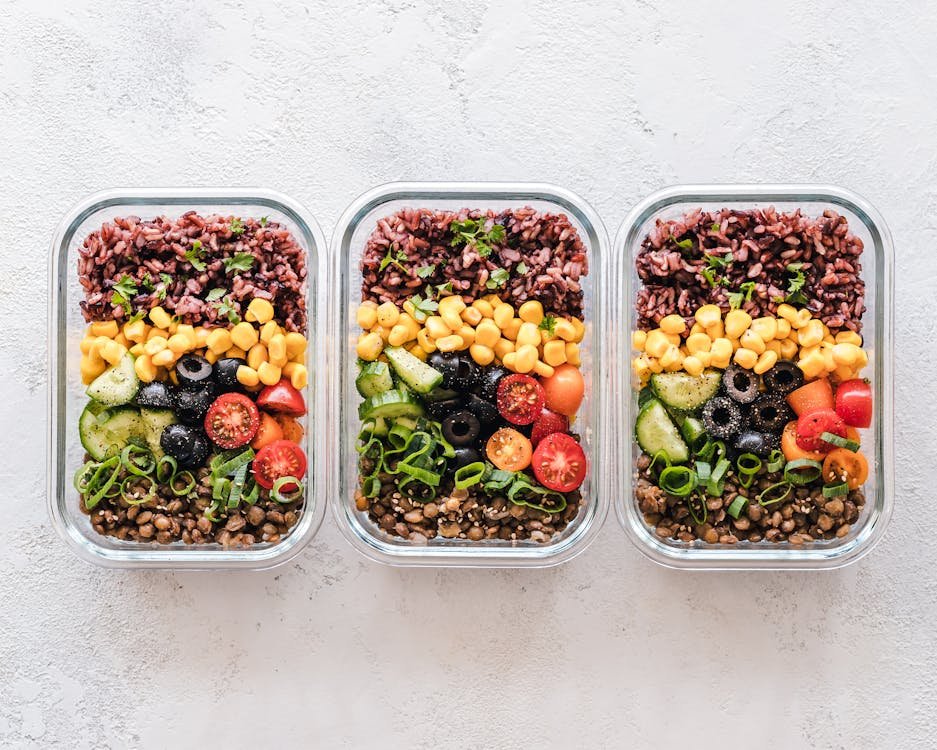
Pro Tip: Using glass jars are a great way to meal prep so your food doesn’t absorb plastic toxins.
3. Avoid Hidden Calories
Hidden calories in certain foods can undermine your fat loss efforts. Common vegan foods that might seem healthy but can have hidden calories include:
Granola: Can be high in sugars and fats, making it calorie-dense despite being a common health food.
Avocado: While nutritious, it's calorie-rich, so portion control is crucial.
Nut Butters: Easy to overeat due to their calorie density, even though they’re a healthy fat source.
Salad Dressings: Many dressings contain added sugars and fats that can significantly increase the calorie count.

Any type of oil drastically increases your caloric intake (1 TBSP of oil is 120 calories).
4. Utilize Intermittent Fasting Wisely
Intermittent fasting can help with dietary adherence and hunger management, but it’s not a magic bullet for fat loss. It’s particularly effective because it can help control calorie intake by reducing the window of time during which you eat. Many people tend to overeat in the evening, so limiting eating times can prevent excess calorie consumption. Experiment with fasting windows to find what works best for your lifestyle and needs, but remember, it's most beneficial as a tool to manage overall calorie intake rather than a standalone solution.

Pro Tip: Use Intermitting Fasting as a tool, not a diet.
5. Set a Step Goal for Increased Activity
Non-exercise activity (NEAT) plays a crucial role in your daily calorie expenditure. Aim for 10,000 steps a day to boost your calorie burn. Additionally, incorporate other daily activities that might not require much thought but contribute to calorie burning:
Taking the Stairs: Instead of the elevator.
Walking During Breaks: Use work breaks for short walks.
Standing While Working: Use a standing desk or take standing breaks.
Household Chores: Activities like cleaning, gardening, or playing with pets can add up.
Parking Further Away: Opt for parking farther from your destination to get more steps in.

Pro Tip: Make walking fun by inviting your friends or family. Put it on your calendar for a recurring outing!
Additional Health Benefits of a Vegan Diet
While effective fat loss is a significant goal, a well-planned vegan diet offers a wealth of additional health benefits that extend far beyond just shedding pounds. By focusing on whole, plant-based foods, you not only support sustainable fat loss but also significantly improve your overall health. Here’s why:
Improved Heart Health
A vegan diet, rich in fruits, vegetables, whole grains, and legumes, can lead to better heart health. Plant-based diets are low in saturated fats and cholesterol, reducing the risk of heart disease. Foods like oats, beans, and avocados are known for their heart-healthy properties, including lowering blood pressure and improving cholesterol levels.
Reduced Inflammation
Chronic inflammation is linked to various health issues, including arthritis, diabetes, and cardiovascular diseases. Vegan diets emphasize anti-inflammatory foods such as berries, leafy greens, nuts, and seeds. These foods are rich in antioxidants and phytonutrients, which help combat inflammation and promote overall health.
Lower Risk of Chronic Diseases
Adopting a vegan diet can lower the risk of several chronic diseases. Research suggests that plant-based diets are associated with a reduced risk of type 2 diabetes, certain cancers, and obesity-related conditions. By prioritizing whole, plant-based foods, you enhance your body's natural defenses and improve your overall health profile.
Enhanced Digestive Health
A diet high in fiber from vegetables, fruits, and whole grains supports a healthy digestive system. Fiber promotes regular bowel movements, prevents constipation, and supports the growth of beneficial gut bacteria, which is essential for optimal digestion and absorption of nutrients.
Increased Energy Levels
Consuming nutrient-dense plant-based foods can boost your energy levels. Unlike highly processed foods, whole plant foods provide a steady release of energy and essential nutrients, helping you feel more vibrant and less fatigued throughout the day.
Better Skin Health
A diet rich in vitamins and antioxidants from plant-based foods contributes to healthier, glowing skin. Nutrients like vitamins A, C, and E, found in fruits and vegetables, help combat free radicals and support skin repair and rejuvenation.
Sustainable Health Benefits
A vegan diet is not only beneficial for your personal health but also for the planet. By choosing plant-based foods, you reduce your ecological footprint, as plant-based diets generally require fewer natural resources and produce less greenhouse gas emissions compared to animal-based diets.
Summary
Incorporating these five proven tips into your vegan fat loss strategy can help you achieve your goals while enjoying a variety of health benefits. By maximizing food volume with vegetables, simplifying your meal prep, avoiding hidden calories, utilizing intermittent fasting wisely, and setting a daily step goal, you'll not only support effective fat loss but also enhance your overall well-being.
A well-planned vegan diet goes beyond just losing weight. It offers a host of additional benefits, including improved heart health, reduced inflammation, and a lower risk of chronic diseases. By focusing on whole, plant-based foods, you’ll feel more energized, support your digestive health, and contribute to a more sustainable lifestyle.
Embrace these practical tips and experience the comprehensive advantages of a well-rounded vegan diet. Your journey to better health and successful fat loss starts with these simple yet impactful steps.
Your Next Steps for Effective Vegan Fat Loss
Ready to take your vegan fat loss journey to the next level? If you’re looking for personalized support and expert guidance, we’re here to help.
At the Vegan Superhero Academy, we’ve helped over 2,250 vegans just like you achieve their health and fitness goals. Our 1-1 coaching program offers tailored plans, dedicated support, and a vibrant community to ensure you stay on track and succeed.
Click here to learn more and join our supportive community today!

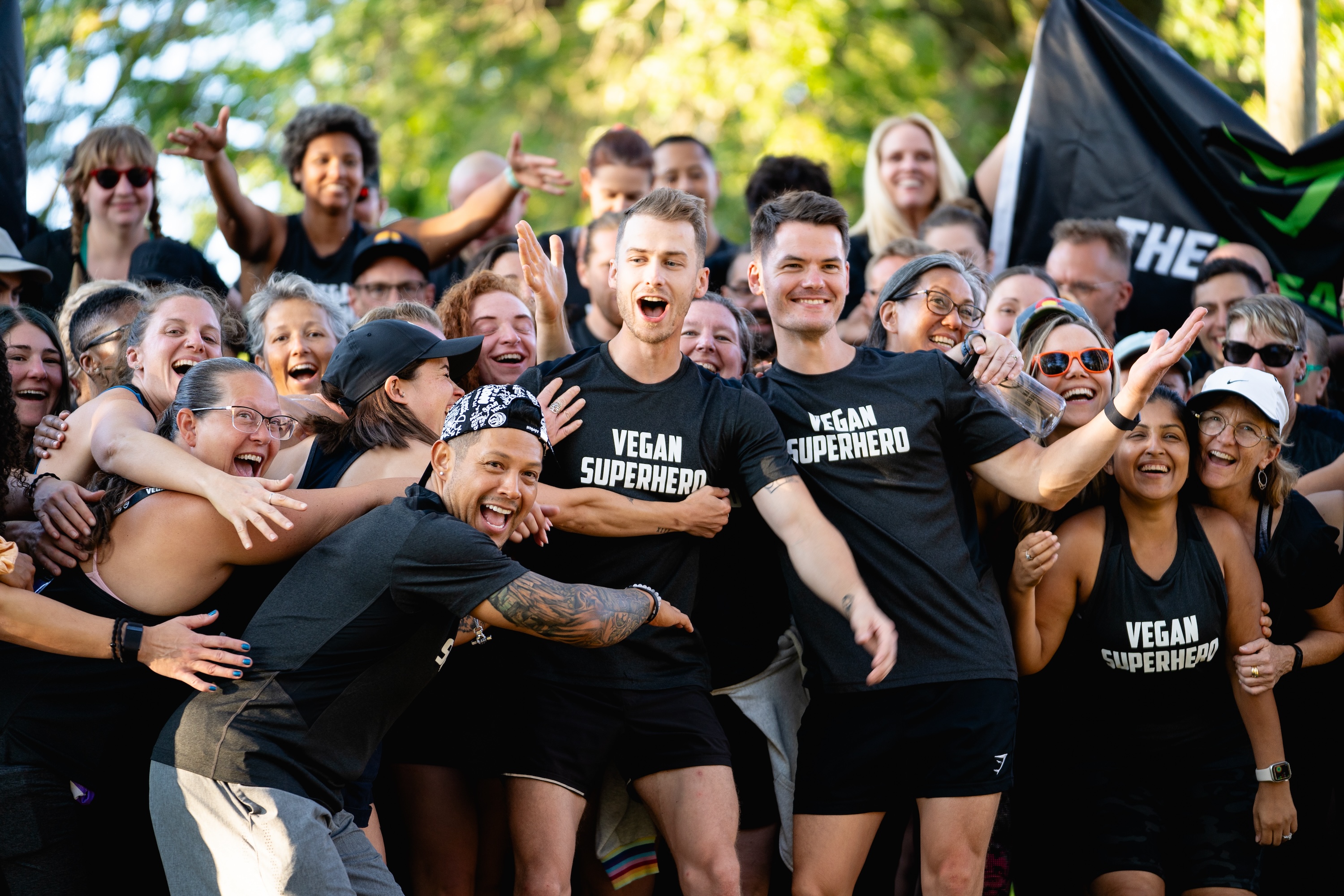
OUR ACADEMY MEMBERS AT THE 2023 VEGAN SUPERHERO RETREAT.
Thanks for reading!
The Vegan Gym
Have a question? Send us a message in Facebook Messenger!
The Definitive Guide To Losing Weight and Getting Shredded on a Vegan Diet
Aside from the physical struggles, losing fat and getting lean is tough on a mental and emotional level. It requires careful planning, hours of meal prep and training, intense commitment, and an iron will.
I learned this first hand when I competed in an online 90-day physique challenge held by YouTuber Christian Guzman.
The rules were simple: submit a before and after video and the most impressive transformation wins.
I didn’t win the competition, but I went from pudgy to ripped and achieved the best physique I’ve ever had. I also learned a lot through the process and wrote this article to share these lessons with you.
But first, I want to show you my transformation…
On March 6th 2017, I entered the competition at 182 pounds (82.6 kg). For reference, I’m 5 feet and 11 inches tall. Here’s the physique I started with…
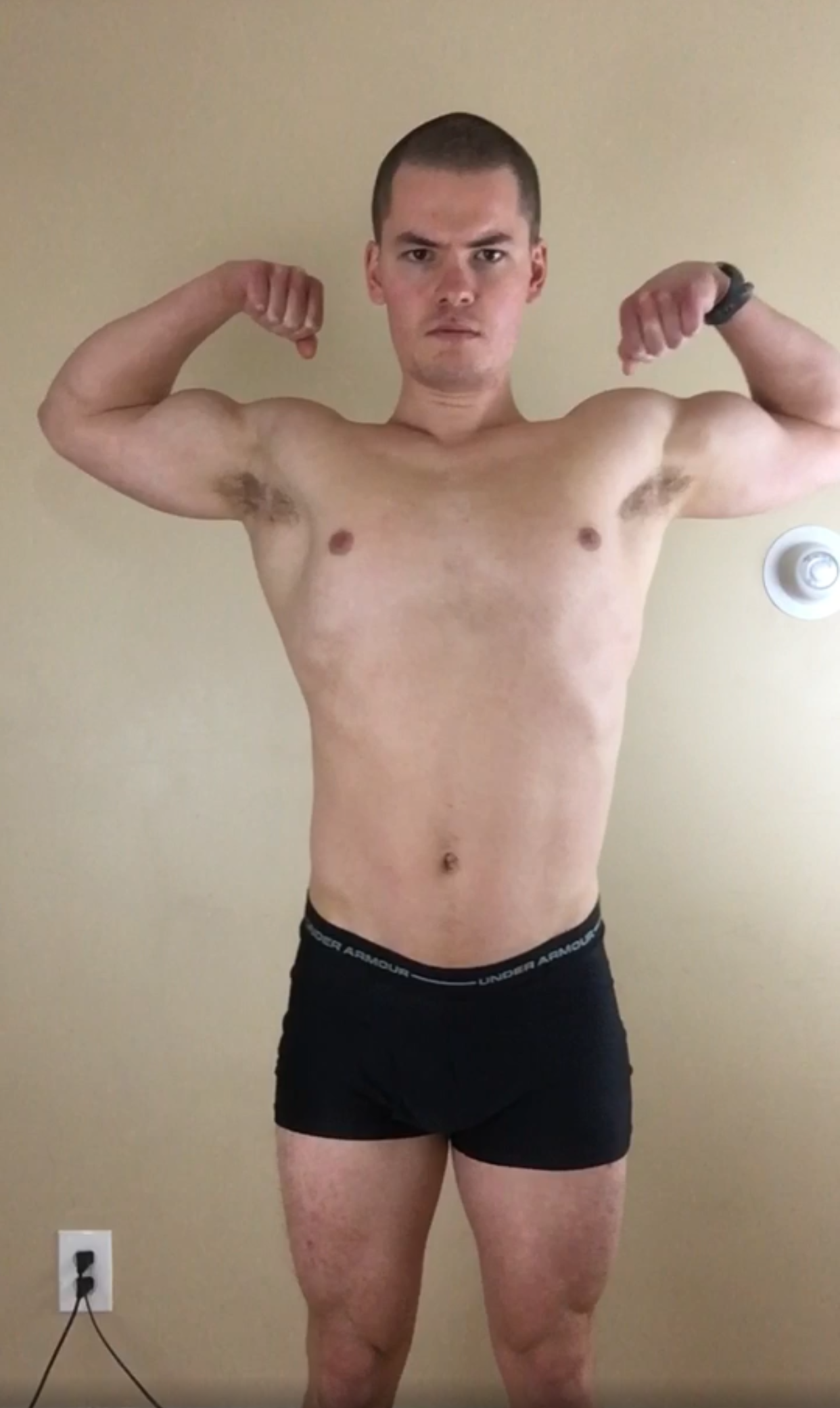
On June 3rd 2017, 90 days later, I finished the competition at 161.5 pounds (73.3 kg), more shredded than ever.

If you doubt this transformation, I don't blame you! There is a lot of BS in the fitness world.
But I assure you this is a 3-month transformation (89 days to be precise). I didn't actually gain any muscle during this period, I just burned body fat. The lighting helped as well to give me an extra shredded look. Here is my before/after video with proof. The video on the laptop that I am holding up in my before video is Christian Guzman's launch video for the Summer Shredding 2017 Challenge, which was uploaded in March 2017. And I hold up an iPhone in my after video clearly displaying the date June 3rd.
In just 3 months, I chopped more than 20 pounds off my already-fairly-lean physique, which equates to an average weekly weight loss of 1.6 pounds.
And my strength didn’t drop at all, indicating that most of this weight loss was bodyfat.
How did I accomplish this?
Well, it required a lot of hard work and mental fortitude, but I learned that having the right plan makes things much easier.
In this article, I will tell you everything you need to know to lose fat and get lean – even shredded if that is your goal.
Here’s what we’ll cover:
How many calories you should be eating to lose fat with ease
Why macros matter (even more than calories!)
My favorite shredding meals (that each take less than 10 minutes to make)
The best exercises for losing fat and getting shredded
Why you don’t have to kill yourself with cardio to lose fat
How much protein you should be eating
Shredding advice from two top bodybuilders (Rebecca Unruth and Zack Staver)
Before we begin, I've been working on creating a course called Vegan Meal Planning Mastery. If you are a visual learner and would like to learn how to create your own meal plan to lose fat and build muscle while eating the vegan foods you love, then you must check it out here: Vegan Meal Planning Mastery course.
I’m running an Early Bird $37 Special for this course, which will officially launch on August 28th. This price will only be good until August 28th.
Okay, now let's begin!
How To Eat To Shred Fat
When your main goal is to lose body fat while maintaining muscle mass, diet and exercise are both important. But, I’d argue that diet is far more important. In this section, we’ll cover the basics about dieting for fat loss.
Caloric Deficit for Fat Loss
You must burn more energy than you consume to achieve meaningful fat loss. This is called a caloric deficit (i.e. consume less calories than you burn).
The size of your caloric deficit and the length of time you maintain it determines how much weight you lose. Every pound of pure body fat that is metabolized yields approximately 3500 calories, thus a daily caloric deficit of 500 calories theoretically results in fat loss of approximately one pound per week if the weight loss comes entirely from body fat.
However, eating very little, known as starvation dieting, isn’t ideal for weight loss. If your caloric deficit is too extreme, your metabolism will slow, you will lose muscle along with fat, and you’ll really hate the process.
In a study of bodybuilders during the twelve weeks before competition, male competitors reduced their caloric intake significantly during the latter half and subsequently lost the greatest amount of lean body mass in the final three weeks. This study is just one of many that suggest diets yielding weight loss of approximately 0.25 to 0.5% of bodyweight weekly may be superior for lean body mass retention compared to more aggressive diets.
How do you achieve steady, sustainable fat loss? You should maintain a caloric deficit of approximately 20% to lose fat while preserving lean muscle mass, energy levels, hormone production, and general well-being. In other words, you should eat about 80% of your total daily energy expenditure.
Why Macros Matter More Than Calories
Macronutrients, often referred to as “macros,” are substances required in large amount in the human diet. There are three primary macronutrients that the human body needs in order to function properly: carbohydrates, fat, and protein.
Regardless of the sources foodwise, 1 gram of protein contains 4 calories, 1 gram of carbohydrates contains 4 calories, and 1 gram of fat contains 9 calories.
Many of the most respected vegan medical professionals (Dr. Michael Greger, Dr. Garth Davis, Dr. Caldwell Esselstyn, Dr. T. Colin Campbell, and many others) do not advocate a specific macronutrient ratio. The ones that do tend to recommend a high carb, low protein, low fat diet with an 80/10/10 split (80% carbs, 10% protein, 10% fat). However, their recommendations do not necessarily reflect optimal dietary approaches to achieve specific physique goals.
A plethora of nutritional research indicates that a high carb, high protein, low fat diet is optimal for gaining and preserving muscle mass. This can be accomplished on a healthy, whole food, plant-based diet with perhaps some protein supplementation depending on your specific goals.
Because your specific macro intakes matter, you should focus on them instead of simply focusing on calories.
For example, let’s say that your total daily energy expenditure is 2,500 calories. Your total daily energy expenditure is simply the number of calories you body burns in a day to function and perform exercise.
If you want to shred body fat, your daily calorie target should be 2,000 calories (2,500 calories x 0.8) to efficiently burn fat.
Of these 2,000 available calories, you need to determine how many grams of carbs, protein, and fat to consume to give you the best chance of achieving your physique goals.
While calculating your macros is simple and straightforward, the process takes a bit of work.
You can calculate your macros accurately with our vegan nutrition calculator. We make it easy by doing it for you right in Facebook Messenger.
Macros are calculated for all clients of The Vegan Superhero Academy. You can apply for the VSA program here!
How Much Protein Should You Consume on a Cut?
To ensure all your weight loss comes from body fat, higher protein intakes are required to help preserve muscle when on a caloric deficit.
A joint study conducted by AUT University, California State University, and the University of Illinois found that caloric intake should be set at a level that results in bodyweight losses of approximately 0.5% to 1.0% per week to maximize muscle retention.
With this caloric deficit, the study concluded, “most but not all bodybuilders will respond best to consuming 2.3 to 3.1 g/kg of lean body mass per day of protein, 15-30% of calories from fat, and the remainder of calories from carbohydrate.”
A meta-analysis led by the same AUT University researchers provided a systematic review of 6 studies with energy-resisted, resistance-trained (> 6 months) adult subjects.
The AUT University researchers reached the same conclusion as the previous study: protein needs for energy-restricted resistance-trained athletes are likely 1.05 to 1.41 grams per pound of lean body mass (2.3 to 3.1 grams per kilogram of lean body mass) scaled upwards with the severity of caloric restriction and leanness. Lean body mass is everything in your body that isn’t fat (i.e., organs, skeletal muscle, water, and bone).
A study from the Exercise Metabolism Research Group at McMaster University concluded that strength athletes on a caloric deficit should consume as much as 0.82 to 0.91 grams per pound of body weight (1.8 to 2.0 grams per kilogram of bodyweight per day), depending on the extent of the deficit.
A study from the School of Sport and Exercise Sciences at the University of Birmingham examined the influence of various dietary protein levels on lean body mass and performance during short-term periods of caloric restriction in athletes. Their findings indicate that young healthy athletes need approximately 2.3 grams per kilogram of body weight for maintenance of lean mass during short periods of caloric restriction.
Collectively, these studies suggest you should consume 0.82 to 1.40 grams of protein per pound of lean body mass (2.3 to 3.1 grams per kilogram of lean mass) when dieting to shred fat.
Please keep in mind that these recommendations are for serious strength athletes and bodybuilders. If you do not compete in strength or physique contests, then you likely don’t need that much protein.
Here are my general guidelines for protein consumption:

If you follow the high carb mantra in most vegan health circles, these protein requirements probably seem way too high.
But trust me. I’d rather hit my protein and be safe than risk burning any of my hard-earned vegan muscle gains while I’m on a caloric deficit.
For example, if an experienced weightlifter (4+ years of weightlifting experience) loses just a single pound of muscle while shredding, it could take 2 to 6 months of intense weightlifting to gain that pound of muscle back during his/her next bulking period!
Assuming five 1-hour workouts per week, that single pound of muscle could take upwards of 135 hours of intense weightlifting to gain back!
I don’t know about you, but I’d rather eat a bit more protein than I probably need to avoid losing any muscle instead of killing myself for 135 hours in the gym just to get back to my pre-shredding lean body mass.
Yes, hitting 1.1 grams of protein per pound of lean body mass while on a caloric deficit is a challenge. It requires careful planning and most likely protein supplementation.
Protein powders simplify your life and allow you to eat plenty of healthy fruits and vegetables while still hitting your high-protein macros.
My Favorite Shredding Meals:
I’m a pretty simple guy. I can eat the same things over and over again. Two of my favorite meals – that I usually eat every day during a cut – are Berry Protein Oatmeal and Jerk Tofu Taco Salad.
These recipes are filling and packed with protein and micronutrients to make you lean and feeling like a million bucks.
Berry Protein Oatmeal

Ingredients:
Quick oats (I use 50 grams during a cut)
Naked chocolate pea protein powder (I use 60 grams during a cut)
Frozen berries (I use 300 grams during a cut)
Nutrition facts: 615 calories, 86 grams carbs (54%), 48 grams protein (31%), 11 grams fat (15%)
Note: I cook the quick oats in water and I do not add any non-dairy milk. If you do need to add some, I would recommend you try low calorie soymilk for the added protein boost.
Jerk Tofu Taco Salad

Ingredients:
Organic tofu (I use 450 grams – weighed uncooked – during a cut)
Shredded cabbage (I use 200 grams during a cut)
Kale (I use 200 grams during a cut)
Refried beans (I use 100 grams during a cut)
Salsa (I use 150 grams during a cut)
Balsamic vinegar (I use 20 grams during a cut)
Nutrition facts: 750 calories, 72 grams carbs (36%), 69 grams protein (31%), 30 grams fat (33%)
Note: The most important part of this recipe is cooking the tofu correctly! Click here to learn how I make delicious, crispy, oil-free tofu.
How To Exercise For Fat Loss
How many people have you seen that spend hours on the treadmill every week, yet never get lean?
How many people have you seen who seem to only lift weights and never do cardio, but are ripped?
What gives? Everybody knows that cardio is required to get lean and weight lifting is just for getting bigger muscles, right?
Not exactly.
Your body fat percentage is primarily determined by your diet. Doing cardio does burn fat, but if you eat too much, your body will simply replace the fat lost with the excess calories you’re giving it.
Weightlifting actually burns about the same amount of calories per hour as low-intensity cardio, but it also burns more calories after your workout, known as “the afterburn effect.” The muscle you build as a result also helps keep you lean because it increases the total amount of calories that your body burns while at rest.
What Are The Best Exercises For Building And Maintaining Muscle?
Just like I recommend for building muscle while bulking, you must emphasize heavy compound weightlifting in your workouts to maintain muscle mass while shredding as a natural weightlifter.
What exactly is a compound exercise?
A compound exercise is an exercise that involves multiple joints and muscle groups. If you maintain proper form and do not overtrain, heavy compound exercises are not harmful to your body.
The best compound exercises are the squat, deadlift, bench press, dip, row, and overhead “military” press.

These exercises are highly “functional” meaning that the strength you develop from them is far more applicable to daily life than targeted isolation exercises like bicep curls.
For example, lifting a heavy 100-pound box will be fairly easy if you are repping out 300-pound deadlifts in the gym.
No matter who you are and what your fitness goals are, compound exercises deserve far more attention than isolation exercises.
What Makes Compound Exercises So Effective?
Because compound exercises employ multiple muscle groups and allow you to lift heavier weights through a large range of motion, compound exercises better progressively overload your muscles than isolation exercises. And the more you can progressively overload your muscles (with proper rest), the faster they will grow.
Although compound exercises are most effective at building muscle, isolation exercises are really important too. Without isolation exercises to fill in the gaps, compound exercises can create imbalances in the mass and strength gains of your muscles.
To avoid imbalances, I use isolation exercises to target muscle groups like biceps and calves that are difficult to hit in heavy, compound movements.
For example, if all you did for leg training was back squats, you’d likely develop an imbalance between the strength and size of your quadriceps (the prime muscle group in the exercise) and hamstrings (the secondary muscle group in the exercise). In the long-term, the result of this imbalance could be hamstring injury or knee problems.
A well-designed weightlifting routine for strength and aesthetics includes both compound and isolation exercises.
Depending the muscle group I am training, compound movements comprise about 60 to 75% of my lifting routine while isolation exercises fill in the remaining 25 to 40%.
How Much Should You Train?
For the first 9 weeks of my cut, I lifted weights 5 to 6 days a week for 50 to 75 minutes. For the last 3 weeks, I ramped this up to 6 days of lifting per week with five 45-minute StairMaster sessions per week.
But the amount of time you spend in the gym isn’t a great metric to follow because it doesn’t really correlate with results.
For example, you could spend 60 minutes in the gym on the flat bench press hitting 5 lightweight sets with 10-minute rest periods spent scrolling Instagram.
Obviously, your results would suck.
Instead, volume is the important metric. Volume, or the total amount of total reps performed, is the determining factor in your muscle and strength gains.
If the volume of your training for each major muscle group is too low, then you will struggle to gain size and strength.
If your volume is too high, then you’ll run into problems related to overtraining. You have to bring the intensity, but take rest days and be careful to not overtrain.
Get the volume right and you will be able to gain muscle like clockwork over time.
According to various experts and studies, optimal volume appears to be in the range of 60 to 180 reps per major muscle group per week. The heavier the training, the fewer reps you should do every week.
Since I focus on heavy compound lifts in the range of 75 to 85 percent of my one-rep max (1RM), I stick to the lower range of the 60 to 180-rep spectrum. I usually lift around 60 to 80 total reps per major muscle group per week.
Should You Do Cardio To Burn Fat?
While I recommend cardio for its many health benefits, if you’re willing to be strict with your diet, you can get lean by that alone and not even bother with cardio.
That being said, I do like cardio because I find it easier to increase my caloric deficit with cardio than by eating less. I feel deprived when I don’t eat a certain amount each day.
Still, I keep my cardio to a minimum because I frankly don’t like it and research indicates that it inhibits muscle growth.
In a 2016 study conducted at the Academy for Sports Excellence in the UK, researchers divided 30 resistance trained men into 4 groups and they completed a 6-week training program in which they trained 3 days per week.
Group 1: Only strength training 3 times per week
Group 2: Strength training 3 times per week and endurance training (treadmill running) once per week
Group 3: Strength training 3 times per week and endurance training (treadmill running) 3 times per week
Group 4: Didn't train at all (control)
At the end of the program, Group 1 and Group 2 had the highest lower body strength increases, but Group 1, the strength only training group, had a significantly higher lower body power increase than all the other groups. Upper body strength increased similarly in Groups 1-3.
What do these findings tell us?
If muscle growth and strength are the primary goals, then you should keep cardio to a minimum.
HIIT vs. Steady State Cardio
If you decide to include cardio in your training routine, you have a few options. You can do high intensity interval training (HIIT) like sprinting or you can do steady state cardio like hitting the stair climber, treadmill, or elliptical with low to moderate intensity.
So which type of cardio is best for fat loss?
A 2017 meta-analysis showed similar reductions in body fat from HIIT vs. steady state moderate intensity cardio when protocols were matched for energy expenditure.
This indicates that personal preference should be the determining factor in which form of cardio to perform from a fat loss standpoint. Importantly, cardio should only be considered a supplement to enhancing fat reduction as neither type of cardio produced clinically meaningful reductions in body fat.
As I’ve said, reducing calories through diet should be your primary focus in getting lean.
What About Fasted Cardio?
I don’t want to get into a huge debate about whether fasted cardio does or does not have a place in anyone's shredding program, but I personally have never done it myself or for my clients. I don't see a reason why I would ever implement it, unless future published research changes my mind.
As it now stands, current research shows that fasted cardio does not cause any significant improvements on weight loss or body composition versus fed cardio.
If you prefer to do your cardio very first thing in the morning for personal/schedule reasons that is absolutely fine, just be aware that you're not doing some magical form of cardio that is going to help you lose more fat than non-fasted cardio.
If you still prefer fasted cardio, I would at least recommend some type of branched chain amino acids (BCAAs) or pea protein shake either before and/or during cardio to help maximize muscle retention.
Should You Take Supplements?
I’ve left the supplement section for last because I think that it is the least important. Hard work and diet produce 99% of the results. Depending on your goals and current level of fitness, you might consider using supplements, but keep it to a minimum.
Beyond my regular supplements – I take vitamin B12, zinc, DHA/EPA, iodine, and vitamin D (only during the winter months) – here are the supplements I take while shredding:
Protein Powder (I take this all the time)
A high-protein diet is absolutely vital for building muscle and maintaining lean body mass when dieting. You don’t need protein supplements to gain muscle, but considering how much protein you need to eat every day to be “safe” in maximizing muscle protein synthesis (MPS) response, getting all your protein from whole food can be impractical.
If you want to learn about the best vegan protein powders for building and maintaining muscle, check out my article: What is the Best Vegan Protein Source for Building Muscle?
Pre-workout
I don’t usually take a pre-workout because I think they are pretty bad for you, but it was a huge struggle to drag myself to the gym on a caloric deficit, especially toward the end of my cut when I was doing 45 minutes of StairMaster 5 times per week. If you need a boost of energy, there are healthier alternatives (e.g. coffee).
BCAAs
According to current research, the required “leucine threshold” to maximize muscle protein synthesis is somewhere between 3.2 and 4.4 grams (for most people). This is easily reached with a soy/pea protein shake and some tofu. However, I believe BCAA supplements are beneficial during a caloric deficit (particularly at low body fat) or during fasted training as a muscle sparing strategy.
If you have a few minutes, check out my article on BCAA supplementation: Should You Take A BCAA Supplement?

Tracking Your Progress
In order to know for certain whether you need to make a change or not, you MUST weigh yourself on a daily basis. Doing so is the only way you will know for certain whether your health and fitness approach is succeeding in reaching your goals. I recommend you weigh yourself at the same time every day (preferably morning) and track your weekly average weight to ensure you are consistently losing weight over time.
Additionally, you must track your calories and macronutrients. The best method I’ve found to track these is an app named Cronometer. I highly recommend Cronometer over other fitness apps such as MyPlate and MyFitnessPal as it tracks your micronutrients as well as individual amino acids in the free version.
Advice From The Shredding Experts
Rebecca Unruth, IPL Bikini Pro
How tall are you?
5'5"
What is your approximate pre-cutting weight?
121.5 lbs
What was your most recent stage weight?
116 lbs
What are your staple cutting foods?
Bananas! I rarely go a morning without my banana smoothie and salads too. You can add protein, carbs, and fats, whatever you want into a salad to make it work for your prep. And you can eat a ton that way.
What is the most difficult part of contest prep?
For me personally it was my schedule. I was working two jobs, going to school 5 days a week with a few surgery rotation days, and trying to train 4-5 days a week. It got rough and I ended up slacking a bit towards the end of prep when finals came around.
What’s your favorite cheat meal after a competition?
There's a local breakfast place near me and I would always get their tofu scramble and sweet potato hash browns! So amazing!
Do you have any tips for people starting their first contest prep?
Do what works for YOU! A lot of people see what other girls are doing for their prep and try to mimic that but every body responds differently. I did the complete opposite of what I've ever learned about prep. I kept eating carbs in abundance but I kept it super clean, fruits, veggies, rice, quinoa, and potatoes. It worked for me so I went with it.
Follow Rebecca on Instagram: @beccau.fit
Zach Staver, NPC Competitor

How tall are you?
5'6"
What is your approximate pre-cutting weight?
188 lbs
What was your most recent stage weight?
148 lbs
What are your staple cutting foods?
My staple cutting foods are vegan protein ice cream, big salads, flatbread pizzas, and puffed rice cereal.
Did you do cardio when cutting?
I use cardio as a tool for weight loss I only implement it when needed. If my calories become too low to where I feel I don't have enough energy to function well I will add cardio in instead of dropping more calories to break weight loss plateaus.
What is the most difficult part of contest prep?
The most difficult part of contest prep is mentally and physically feeling horrible day in and day out at different times of the day. You go through many highs and lows and battling them is hard. Also when you get really lean you're constantly cold so that was a huge struggle.
What’s your favorite cheat meal after a competition?
I don't believe in the term "cheat meal" it provides a negative connotation and leads people to often times over eat or have quilt associated with a certain meal. No food in moderation is bad for you and I follow a flexible dieting lifestyle so I can fit in any "cheat" foods daily into my caloric goals. I had no urges to have a cheat meal after my show I simply just wanted more food. I went to a restaurant but that was just to spend time with family, to me I just wanted more of the food I was already eating.
Do you have any tips for people starting their first contest prep?
Give yourself more time than you think you need. All too often people think they're bigger or less fat then they really are and they don't realize the amount of weight that's needed to cut to actually be stage level leanness. Also I'd tell them to trust the process and not get too bogged down by little fluctuations. Take it slow and make sure you're maintaining as much hard earned muscle as possible.
Follow Zach on Instagram: @veganmeathead
Final Thoughts: Adjust Your Plan Based on Your Results
If a weight loss program gets you results, but cannot be sustained over the long term, then it is not the right program for you.
Let’s be honest, everyone wants to look and feel great, but we don’t want to achieve our goals with a daily regimen of tasteless slop and tortuous workouts.
What we really want are diet and training plans that are enjoyable, effective, and sustainable. The goal here really isn’t short-term fat loss, the goal is to create a healthy, sustainable, fit vegan fitness lifestyle.
If your body is responding well and changing as desired, just keep doing what you are doing.
Need some help to get in the best shape of your life?
You can apply for The Vegan Superhero Academy online personal coaching program here.
That's a wrap! Thank you SO MUCH for reading this article!
Was this article helpful to you? Please be sure to share this article with your vegan fitness friends by clicking the share buttons below! I'd really appreciate it and so would your friends!